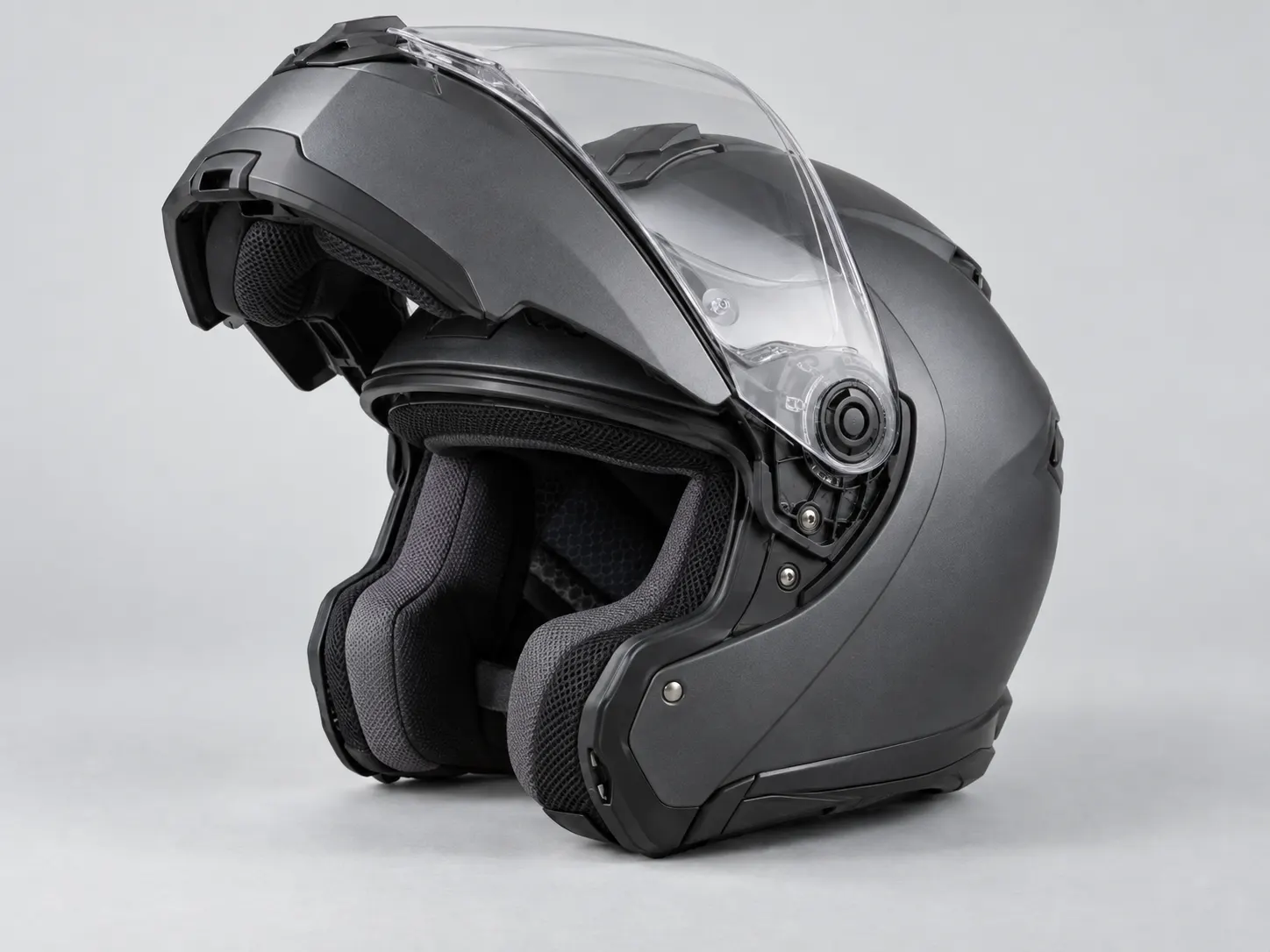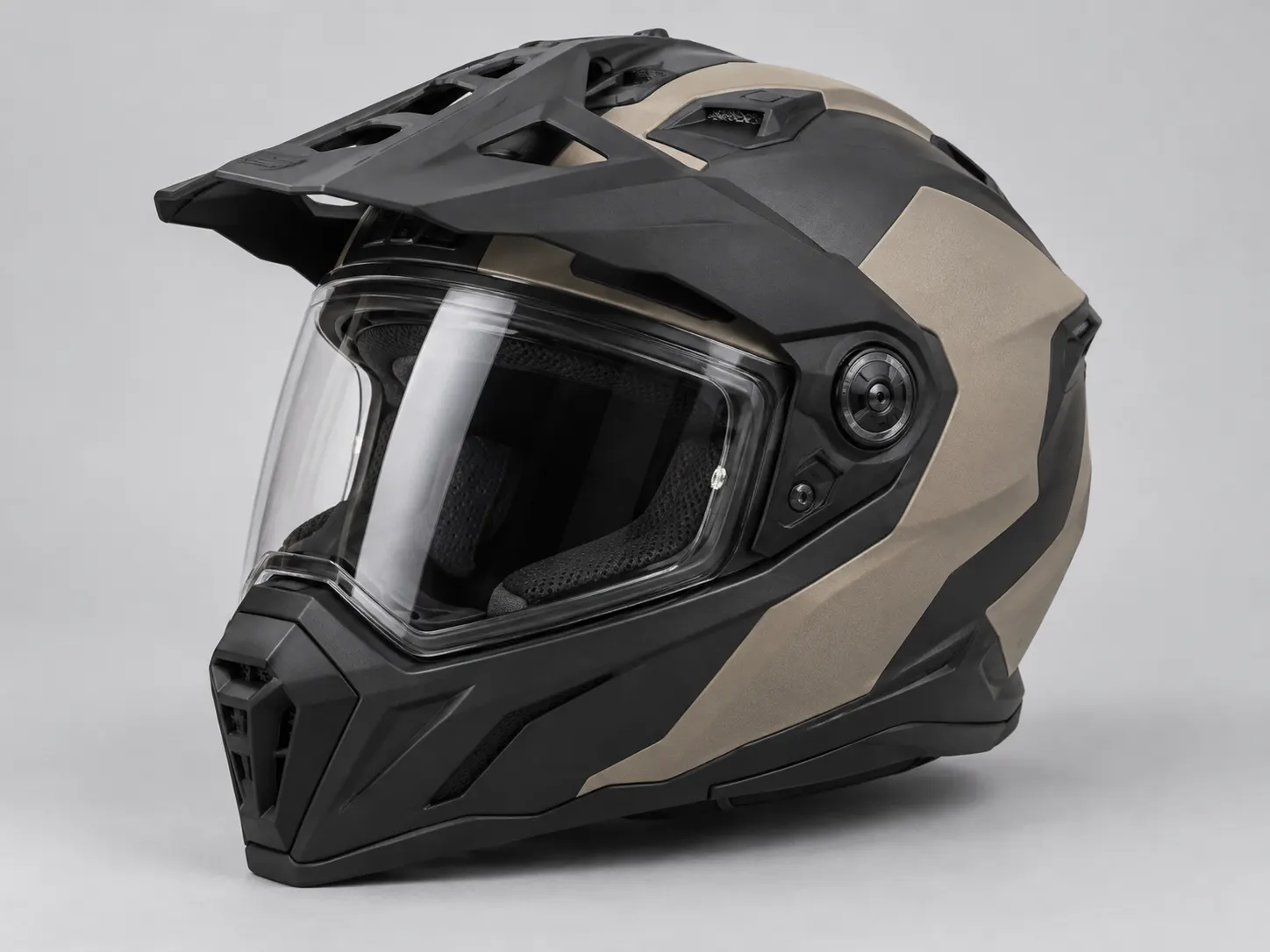
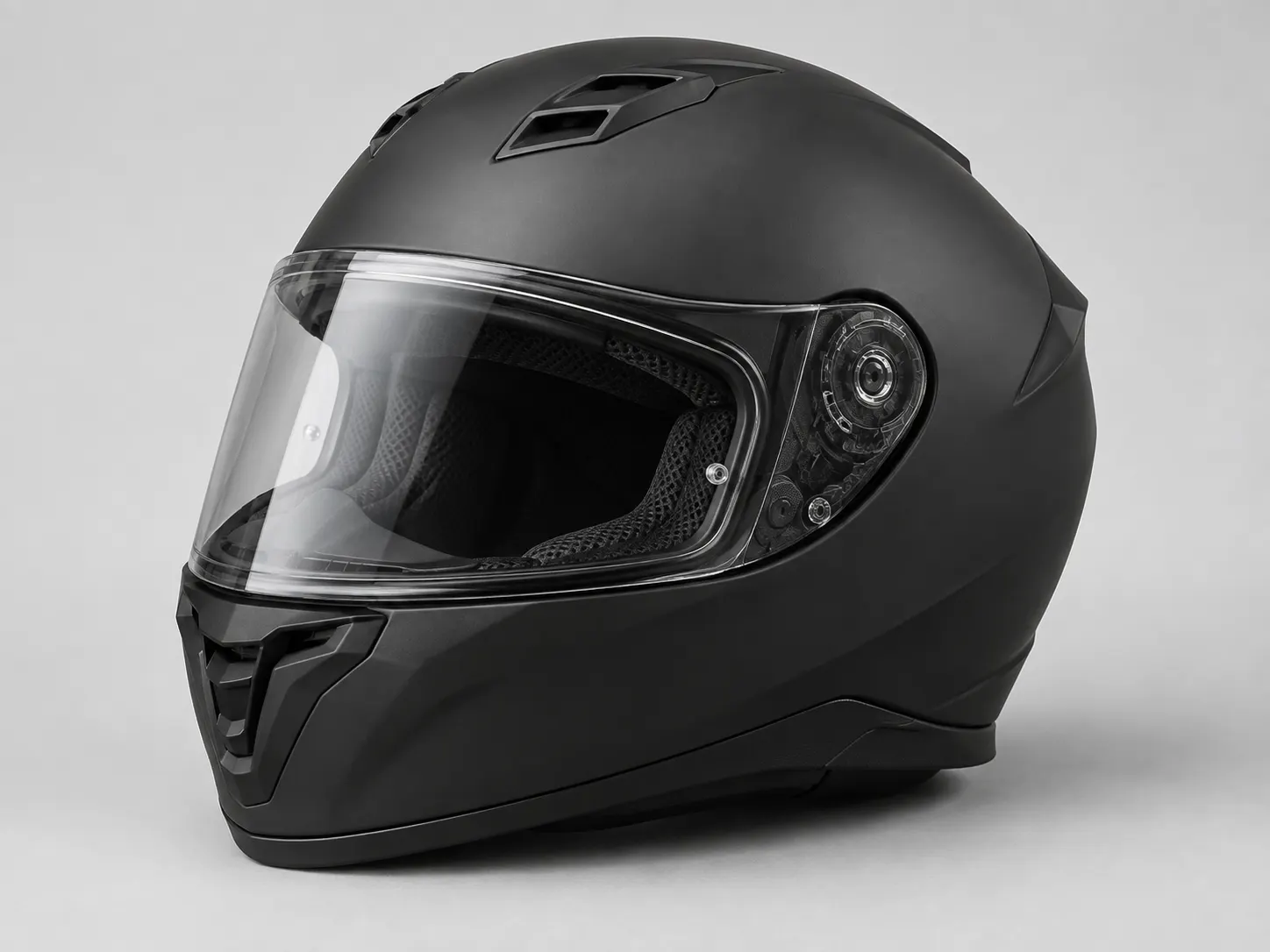
Illustrative image—not the exact model.
Use shell material to understand construction, then choose between complete helmets. Carbon, composite and polycarbonate labels alone cannot tell you which model fits, weighs less in your size or performs better in an impact test.
Start with the exact helmet
A shell-material label describes one part of a helmet. It does not tell us how the complete model performed in an impact test. SHARP reports differences in impact protection between tested helmets; a shared approval standard is not evidence that two models perform identically.
Read the manufacturer’s terminology
Our catalog keeps the manufacturer’s documented shell description, including proprietary names. Proprietary material names are retained for accuracy. A separately named Carbon version may have a different specification from the standard version.
Compare weight fairly
Use a documented weight with its size and configuration. A figure without a size cannot establish that one helmet is lighter than another in your size. Our tables leave weight unverified when that context is missing.
A useful shortlist
- Match the model generation and EU or US version.
- Read model-specific approval and independent test records where available.
- Compare documented equipment and size-specific weight.
- Assess the actual fit rather than assigning comfort from the shell material.
Evaluate the complete helmet alongside its material specification. Use the regional comparison tool to examine the available evidence and its gaps.
Make the material comparison useful
Build a shortlist with your required features first. The AGV K6 S documents carbon-aramid construction; the K1 S documents thermoplastic. Try both sizes and compare included accessories before drawing a conclusion from the shell label. Their material descriptions are not a laboratory comparison.