a person wearing a helmet and sitting on a motorcycle

Dual-Sport Helmet Buyer’s Guide: Everything You Need to Know

Dual-sport helmets bridge road and off-road — but choosing the wrong one for your riding style is a costly mistake. This complete guide covers what to look for, the key trade-offs, and our top picks across every budget.

Dual-sport helmets are the most versatile type on the market — and the most misunderstood. A helmet that looks like it can do everything often does some things poorly. Understanding what dual-sport design actually involves, and where the real trade-offs lie, helps you choose a helmet that matches your actual riding rather than an idealised version of it.

What Is a Dual-Sport Helmet?

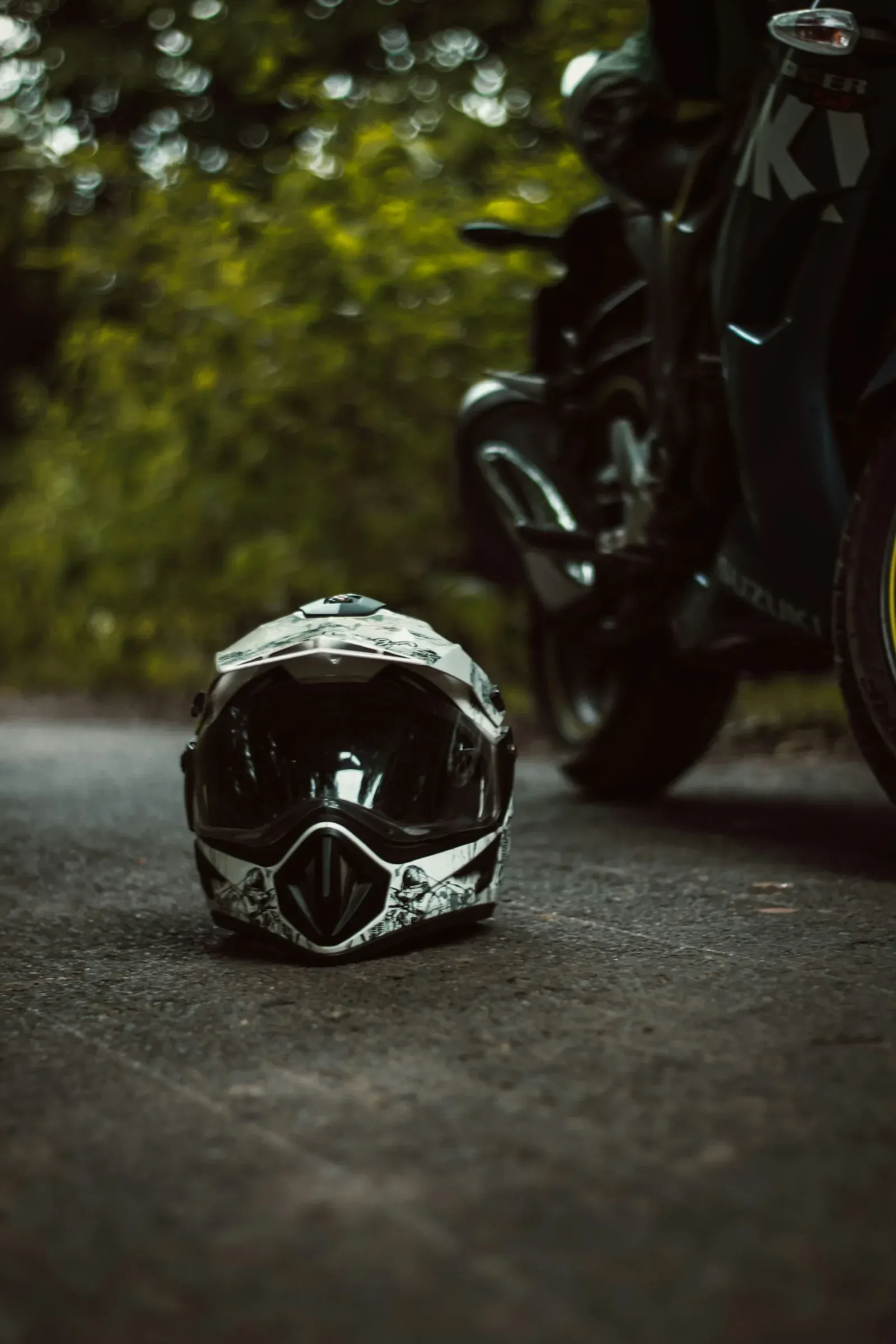
A dual-sport helmet — also called an adventure helmet — combines elements of full-face road helmets with off-road motocross lids. The defining features are a detachable or integrated peak (to deflect debris and sun), a visor for road use, and a shell geometry accommodating both. Most also feature more aggressive ventilation than pure road helmets, reflecting the lower speeds and varied conditions of adventure riding.

They are not the same as pure motocross helmets — those typically lack a visor and are designed for off-road only. And they’re not simply road helmets with a peak bolted on — well-designed dual-sport helmets are engineered specifically for the use case, with different shell shapes, vent placements, and eye port geometries to suit the riding position and speed range of adventure bikes.

The Key Trade-Offs

Every dual-sport helmet makes compromises. Understanding where yours land helps you choose correctly:

  • Noise vs ventilation: The open vent design and peak that make dual-sport helmets excellent at low off-road speeds become a liability at motorway speeds — most are significantly louder than road-focused full-face helmets above 70mph. The Klim Krios Pro sits at the extreme ventilation end; the Bell MX-9 Adventure MIPS is louder still. If you spend significant time on motorways, this is the most important trade-off to understand.
  • Road visor vs goggles: Most include a visor for road use. Those without — designed for goggles — prioritise off-road performance but are legally limited on UK and European roads without eye protection. Check whether the helmet is certified for road use with or without a visor.
  • Peak on or peak off: The peak creates drag and turbulence on road, particularly above 60mph. Many riders remove it for long road sections and reattach for off-road. How easy the peak is to remove and how secure it is when fitted is a practical consideration worth checking in reviews.
  • Weight: The Klim Krios Pro at ~1,290g is exceptional; most adventure helmets sit in the 1,400–1,600g range. Lower weight reduces neck fatigue on long off-road days.

Certification: What to Check

For road use, your dual-sport helmet must carry ECE 22.06 (Europe) or DOT (USA) certification as a minimum. Some adventure helmets carry both road and off-road certification — confirming they’re tested for road use with the visor fitted. Helmets certified only for off-road use (common with pure motocross lids) are not legal on public roads in most jurisdictions. Always verify certification before purchase, particularly for helmets that blur the line between adventure and motocross design.

Visor vs Goggles: Which Is Right for You?

Visor-equipped adventure helmets are the practical choice for riders whose off-road use is occasional or moderate — trail riding, green lanes, gravel roads. The visor provides weather protection and is legally compliant for road use without additional equipment.

Goggle-compatible helmets — with a larger eye port and no integrated visor — are better for serious off-road use where eye protection from roost, branches, and debris requires the superior peripheral vision and debris resistance of goggles. The trade-off is that you need a separate pair of quality goggles, and road use requires either fitting goggles on the road or a clip-on road visor.

Shell Material Matters More for Adventure Helmets

For road-focused helmets, shell material affects weight and rigidity but the difference is manageable. For adventure helmets used off-road, shell material directly affects how the helmet manages impact energy in falls at varied angles — the non-planar impacts common in off-road riding. Composite shells (fibreglass, carbon, Dyneema combinations) manage energy better across a wider range of impact angles than polycarbonate. The Klim Krios Pro’s composite shell is a meaningful safety advantage over polycarbonate adventure helmets for genuinely off-road use.

Top Picks by Riding Profile

Primarily Road, Occasional Off-Road

Riders who spend 80%+ of their time on road but want off-road capability for green lanes or gravel should prioritise noise performance and road comfort over maximum ventilation. The Bell MX-9 Adventure MIPS is the accessible choice — excellent ventilation, MIPS, ECE 22.06, at a price that doesn’t sting if it gets scratched.

Balanced Road and Off-Road (50/50)

The Klim Krios Pro is the benchmark for genuinely mixed-use adventure riding. Its composite shell, exceptional ventilation, and Transitions photochromic visor make it the most accomplished 50/50 adventure helmet available. The noise penalty at motorway speeds is real — plan for earplugs on fast stretches — but for riders genuinely using their bike across both surfaces, nothing balances the requirements better.

Primarily Off-Road, Some Road

For enduro riders, trail riders, and those whose road sections are primarily getting to and from off-road destinations, prioritise off-road performance — ventilation, weight, goggle compatibility, and peak size — over road refinement. The Fox Speedframe Pro sits at the extreme of this spectrum: extraordinary ventilation and MIPS protection for trail use, but very loud at road speeds and open-face. Match the helmet to what you actually spend most of your time doing.

Features Worth Paying For

  • MIPS or equivalent rotational protection: Off-road falls frequently involve angled impacts — rotational protection is more valuable here than in road-only helmets.
  • Removable/washable liner: Adventure riding generates more sweat and dirt than road use. A fully removable, machine-washable liner is a practical necessity.
  • Photochromic visor option: Adventure riding often involves moving between sun and shade rapidly. The Klim Krios Pro’s Transitions shield eliminates the need to stop and swap visors.
  • Positive peak locking: A peak that rattles or deflects at speed is distracting and potentially dangerous. Check reviews for peak stability at road speeds.

What to Skip

  • Internal sun visors: Genuinely useful on road helmets, less valuable in adventure helmets where a tinted or photochromic visor serves better — and the internal mechanism adds complexity and weight.
  • Integrated Bluetooth: Adventure helmets take more abuse. Built-in electronics are harder to protect and more expensive to replace. A quality retrofit system is more practical for adventure use.

Sizing and Fit for Adventure Helmets

Adventure helmets are worn with a forward riding position that differs from road bikes. The helmet needs adequate peripheral vision both when looking straight ahead and when looking down at terrain in front of the wheel. Test the fit in a position mimicking your riding stance — not just standing upright. The eye port should be large enough that your vision isn’t compromised when your head is tilted forward. If buying for goggle use, bring your goggles when trying the helmet — not all goggles fit all eye ports, and a poor seal lets debris in.