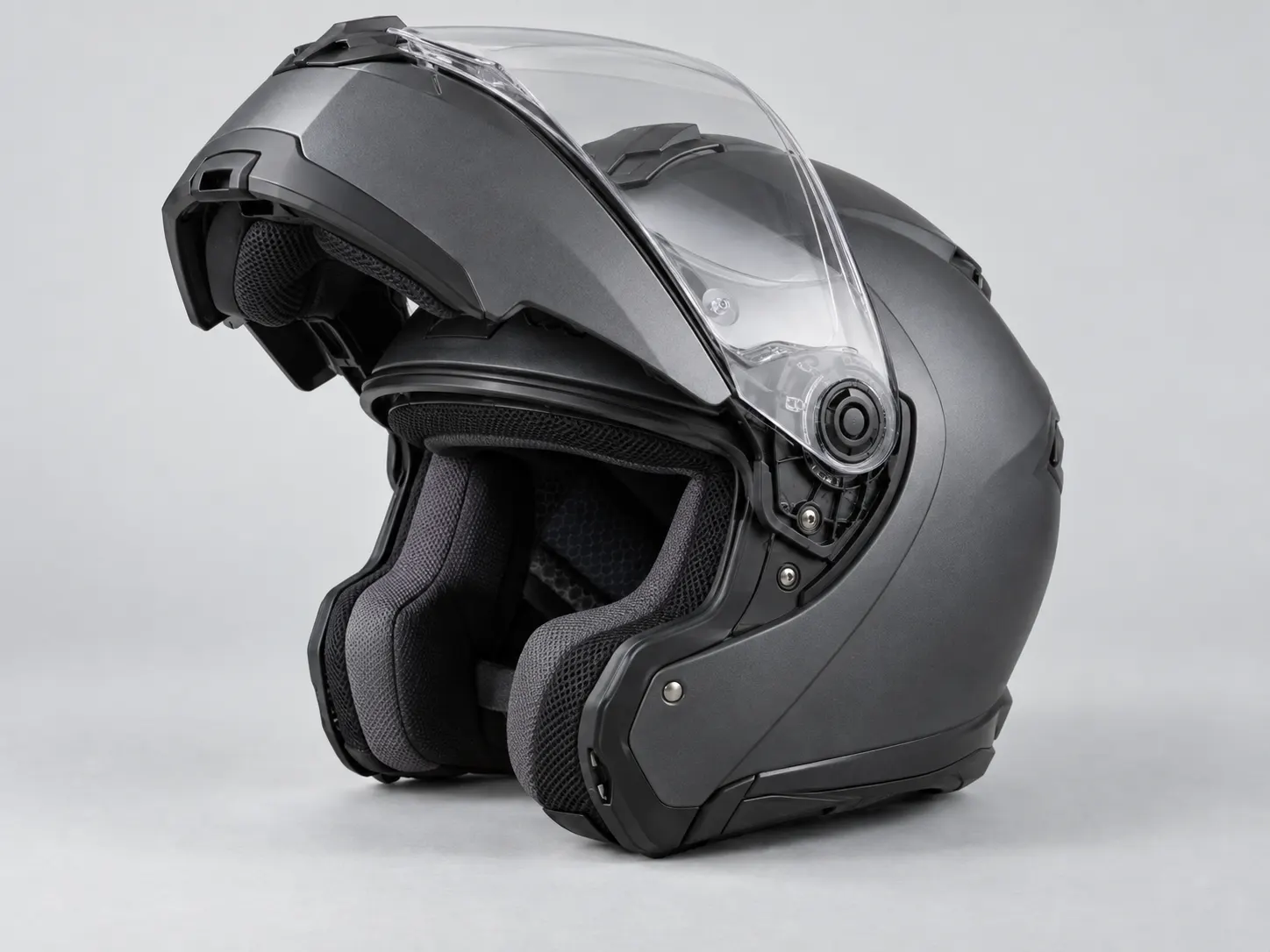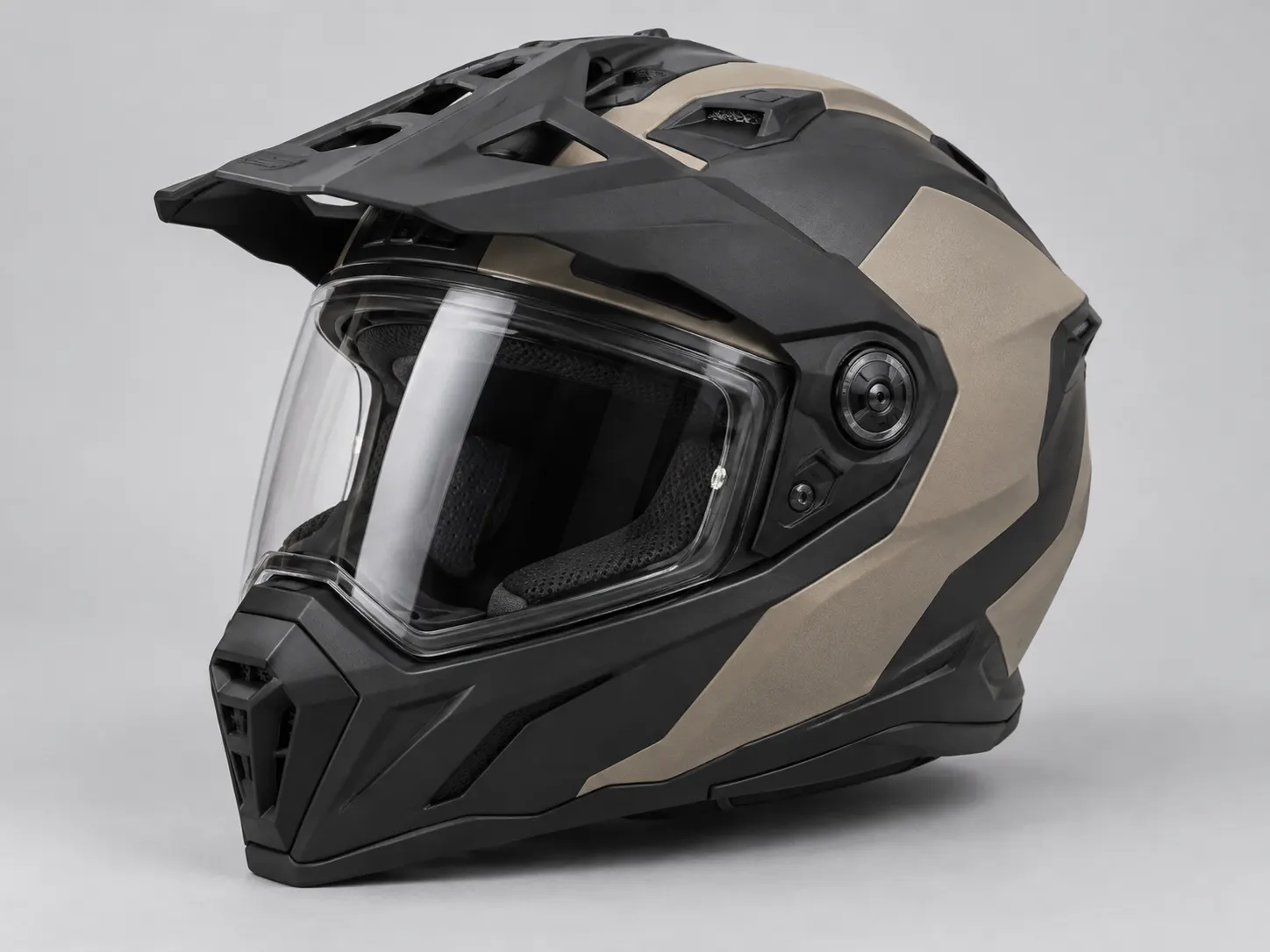
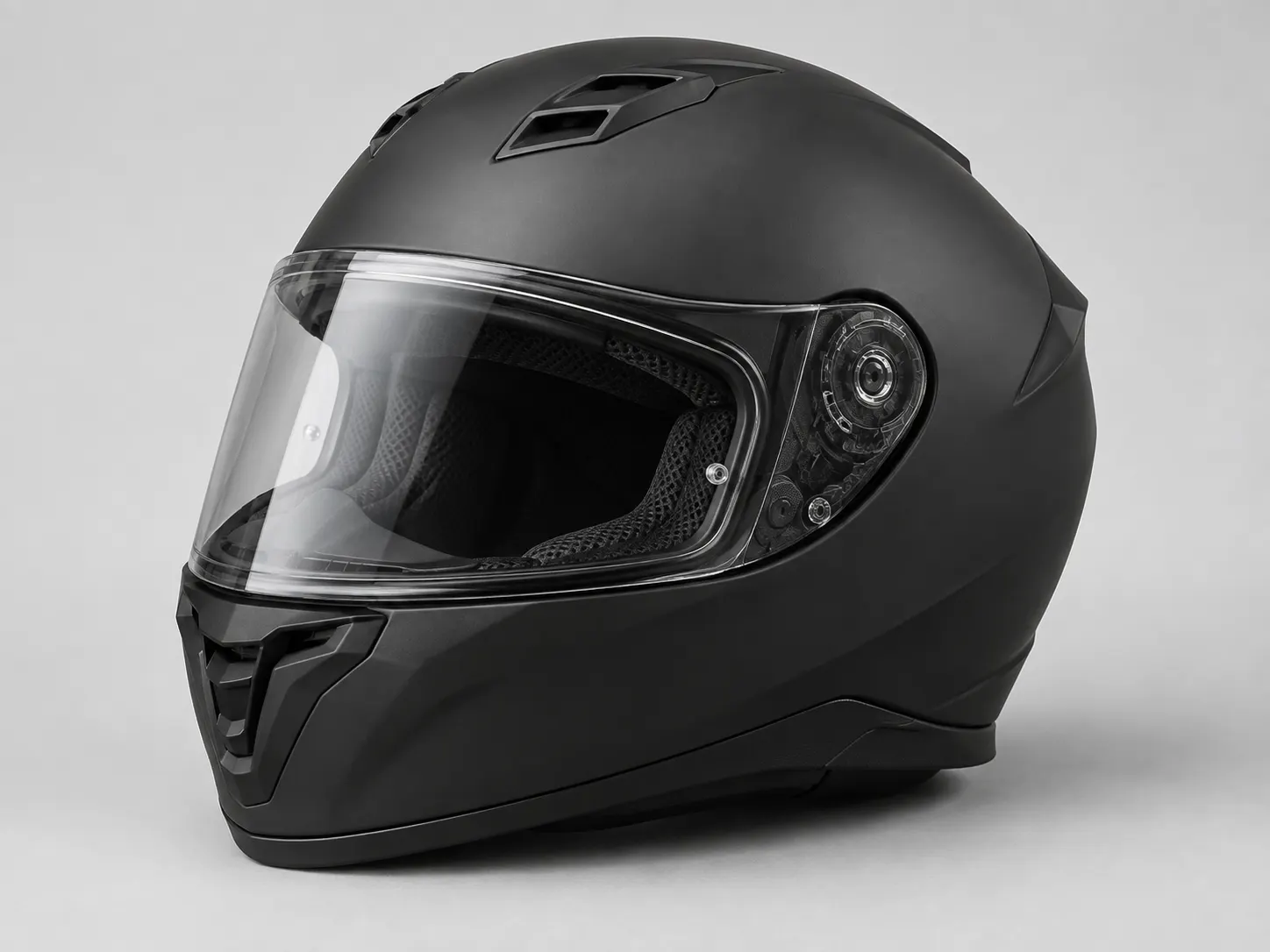
Illustrative image—not the exact model.
Read the complete approval label on the helmet you will buy. DOT, ECE and Snell describe different systems; the revision and regional model matter more than the number of logos in a product listing.
Read the complete designation
DOT, ECE 22.06 and Snell identify different systems. They are not interchangeable star ratings. Start with the exact model, production version, market and label, rather than assuming that a familiar model name carries every approval advertised elsewhere.
DOT: manufacturer certification
NHTSA explains that the DOT marking represents manufacturer self-certification to FMVSS No. 218. NHTSA does not pre-approve helmets; it tests selected products for compliance and can require recalls. Describing a model as “NHTSA approved” would misrepresent that process.
ECE 22.06: UN Regulation No. 22
The 06 designation identifies the amendment series of UN Regulation No. 22 for protective helmets and visors. Keep it distinct from ECE 22.05. Our catalog records an ECE claim only where the cited documentation identifies that version for the regional model. It does not infer the label of an individual helmet from a similar model sold in another country.
Snell: include the year and suffix
Snell’s M2025 documentation identifies M2025D and M2025R as separate standards. Both include oblique-impact tests, but they are not the same designation. A listing that says only “Snell” does not establish the year or suffix. Check the actual certification label and corresponding record rather than upgrading older stock from a current product page.
Approval is not a complete comparison
SHARP publishes model-specific test information and explains that helmets can differ in impact performance. Sharing a regulatory standard does not prove equal protection in every test. Neither a certification list nor a shell-material name supplies an independent comfort, noise or ventilation score.
Before relying on a label
- Match the complete model and regional version.
- Check the full standard designation on the item and in its documentation.
- Check current local requirements and any event organizer’s rules for your intended use; this guide does not establish universal road or track eligibility.
- Keep missing evidence visible instead of substituting a related model’s approvals.
Use our regional comparison tool to see source links and unknown fields separately for Europe and the United States.
Use the catalog as a starting point
Filter the helmet catalog by a documented certification, then open the matching regional specifications and source. A catalog match helps you find a model to investigate; it does not replace the individual helmet’s label or an event organizer’s current requirements.
Sources
- NHTSA: helmet certification and compliance
- UNECE: UN Regulation No. 22, 06 series reference
- Snell: M2025D and M2025R explanatory document
- UK SHARP: testing and interpretation
Sources checked 8 September 2026.