
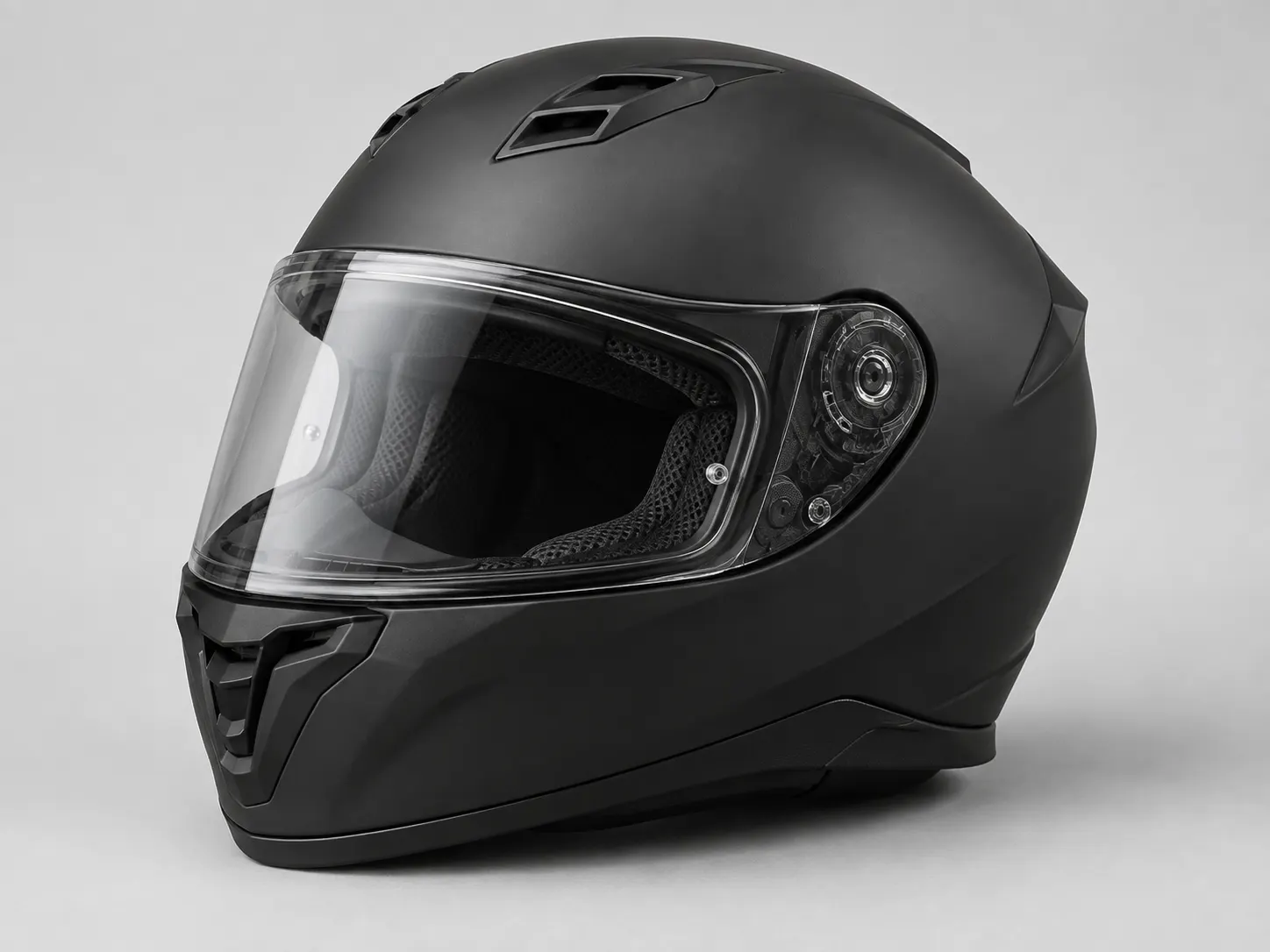
Illustrative image—not the exact model.
Sena Stryker
By Jack Rydell
The Sena Stryker is a full-face helmet with integrated Mesh and Bluetooth communications. Sena identifies DOT or ECE versions according to region.
Who should consider it
Riders who want communications built into the helmet and need to coordinate with their riding group.
Features and trade-offs
Sena lists a composite-fiberglass shell and Harman Kardon audio components. Integrated communications are part of the product concept, unlike a helmet merely prepared for an optional headset.
Choosing integrated electronics also means choosing an audio and support ecosystem. Check group compatibility, firmware support and replacement options before purchase.
What to check at a fitting
Wear the helmet with the speakers in their intended position. Check for pressure around the ears and try the controls during a stationary demonstration.
Start with the manufacturer’s size chart and keep the helmet on long enough to identify pressure points. Follow the model’s fitting instructions and repeat the retention checks after any approved adjustment. Record the size and padding configuration that works for you.
Use the helmet fit checklist before comparing accessories.
Two alternatives to try
- HJC RPHA 71 (US). US touring riders who want an internal sun visor and the option to add a compatible SMART HJC system.
- HJC i71 (US). US riders who want a full-face helmet with an internal sun visor and optional SMART HJC communications.
Compare these three helmets. Keep the version labels visible when considering models from different markets.
Sources
Sena Stryker — manufacturer specifications
This is a documentation-based buying guide. Fit, noise and comfort have not been scored from hands-on testing.
Helmet specifications
Regional specifications are kept separate. Unknown values are not estimated.
US version
- Model / market
- Stryker · US
- Manufacturer-listed certifications
- DOT
- Shell
- Composite fiberglass
- Internal sun visor
- Not verified
- Fastening
- Not verified
- Manufacturer weight
- Not verified
US DOT variant. Source identifies ECE for other regions but does not establish a version for this record. Do not substitute Sena Phantom specifications.
Certifications are not comparative safety scores. Check the label on the exact helmet; production versions and market approvals can differ.