Motorcycle Helmet Laws by Country: A Touring Rider’s Guide

Planning a cross-border tour? Helmet laws and certification requirements vary between countries. Our guide covers what you need to know about certification, legal requirements, and staying compliant abroad.

Touring across borders is one of motorcycling’s great pleasures — but helmet laws and certification requirements aren’t uniform between countries. Getting caught out can mean fines or worse. This guide covers what touring riders need to know about staying legal and compliant abroad. Note that laws change, so always verify current requirements for your specific destinations before travelling.

Certification Is the Key Issue

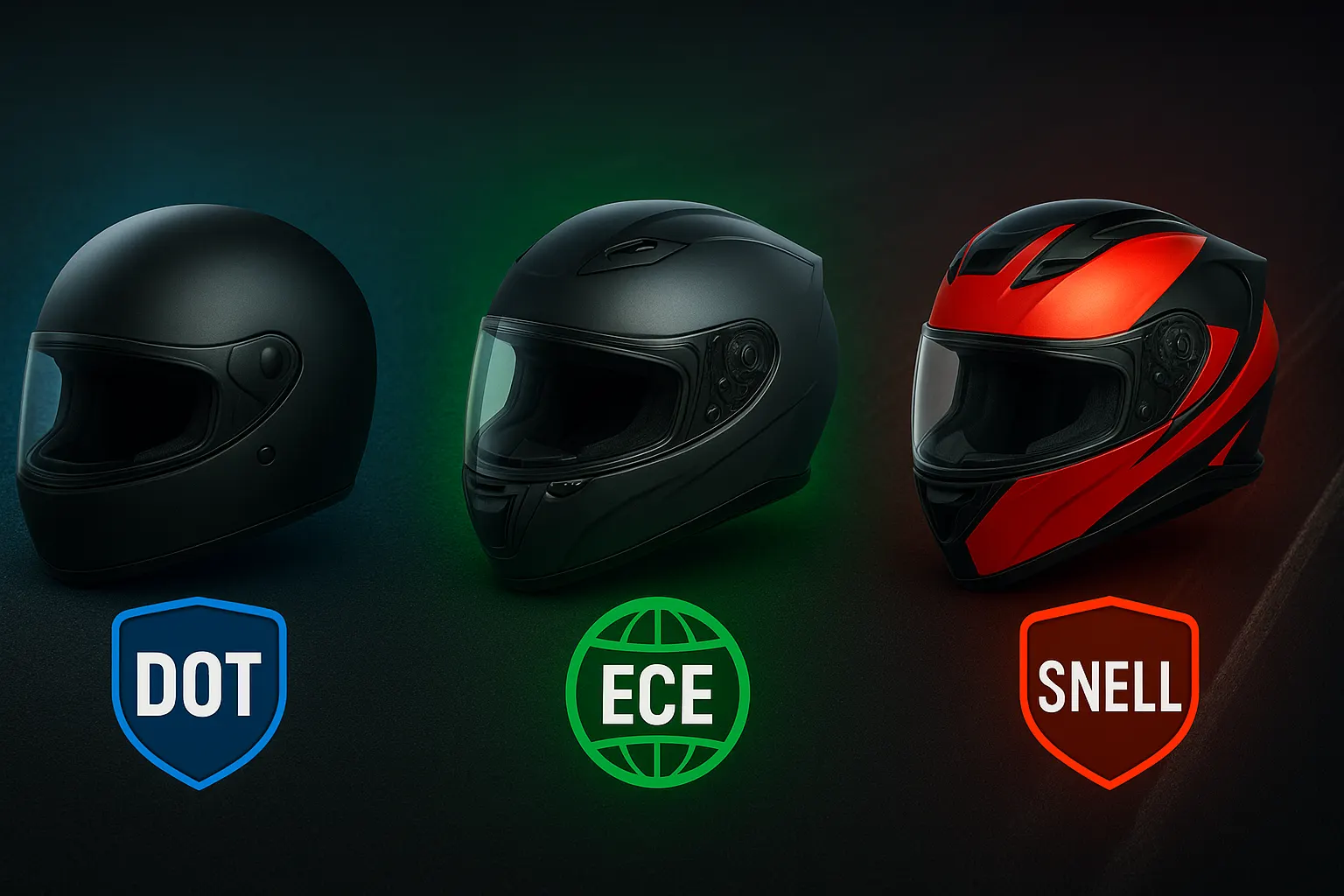
The most important thing for touring riders to understand is that different regions recognise different certification standards. A helmet legal in one country may not be legally recognised in another if it doesn’t carry the accepted certification mark. For riders touring within and across Europe, ECE 22.06 (or the older ECE 22.05) is the standard to have — it’s recognised across the ECE member states, which include most of Europe and many countries beyond.

Europe: ECE Is Standard

Across the European ECE member states, helmets must generally carry ECE certification to be legal. ECE 22.06 is the current standard, having superseded 22.05. If you’re touring Europe, an ECE 22.06 helmet keeps you compliant across the vast majority of countries you’re likely to visit. This harmonisation is one of the practical benefits of the ECE system — a single certification covers a large touring area. Helmet wearing is mandatory throughout Europe for both riders and passengers.

United States: DOT, and State Variation

In the US, the federal DOT (FMVSS 218) standard applies, but helmet-wearing laws themselves vary significantly by state. Some states have universal helmet laws requiring all riders to wear a helmet; others require them only for younger riders or those without certain insurance; and a few have no general helmet requirement for adults. Touring across US state lines means the legal requirement to wear a helmet can change even though the certification standard (DOT) stays constant. Always check the specific states on your route.

Riders Crossing Between Systems

If your touring crosses between certification systems — for example a US rider shipping a bike to tour Europe — check that your helmet carries the certification recognised at your destination. A DOT-only helmet may not satisfy ECE requirements, and vice versa. Some premium helmets carry multiple certifications (DOT and ECE, sometimes Snell too), which is genuinely useful for international touring. The Shoei RF-1400, for instance, carries DOT, ECE 22.06, and Snell — a practical advantage for riders who cross regions.

Practical Advice for Cross-Border Touring

  • For European touring, an ECE 22.06 helmet keeps you compliant across most of the continent
  • Check the specific certification requirements of every country on your route before travelling
  • Consider a multi-certification helmet (DOT + ECE) if you regularly cross between regions
  • Helmet wearing is mandatory across all of Europe — there’s no exemption to rely on
  • In the US, check helmet-wearing laws state by state along your route, as they vary
  • Laws change — verify current requirements close to your travel date rather than relying on old information

A Note on This Guide

This is general guidance, not legal advice. Helmet and road-traffic laws change and vary in detail, and the responsibility for compliance rests with you as the rider. Always confirm the current, specific requirements for each country or state on your planned route with an authoritative source before you travel.