Motorcycle helmet cleaning

Motorcycle Helmet Maintenance: How to Make Your Helmet Last

A well-maintained helmet protects better and lasts longer. Our complete guide covers cleaning shell, liner, visor and vents — plus the signs that mean it's time to replace.

A motorcycle helmet is the most safety-critical piece of kit you own. Proper maintenance preserves the materials that protect you, keeps the retention system working correctly, and helps you spot damage before it becomes dangerous.

Cleaning the Shell

Clean the outer shell with warm water and mild soap — washing-up liquid works well. Use a soft cloth. Never use solvent-based cleaners, petrol, or anything abrasive — solvents attack the resin holding composite layers together and can compromise structural integrity without visible damage. Bugs and tar can be loosened by leaving a damp cloth against the shell for a few minutes before wiping. Don’t scrub.

Cleaning the Visor

The visor scratches easily. Always rinse bugs and grit off with water before wiping — grinding particles across the surface causes scratches. Use a microfibre cloth only — never paper towels, which are abrasive on optical coatings. Most visors have anti-scratch and anti-fog coatings that harsh cleaners strip. Water and microfibre is usually enough. Pinlock inserts should be cleaned with water only — the soft fog-absorbing polymer is easily damaged by cleaning products.

Cleaning the Interior Liner

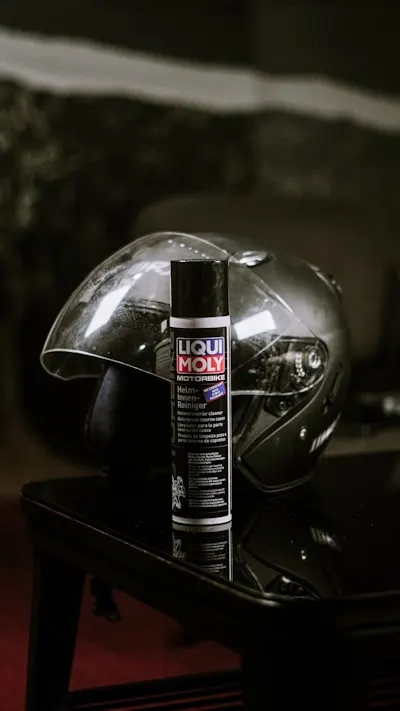
Most modern liner systems are removable and machine washable — check your helmet’s manual for specific guidance. Most recommend cold or warm cycle, gentle setting, no tumble drying. Air dry flat to preserve the foam structure. Wash every few months for regular riders, more often in summer. If your liner isn’t removable, use a damp cloth with mild soap and leave the helmet in a ventilated area to dry thoroughly.

Cleaning the Vents

Blocked vents reduce airflow and trap moisture inside the EPS. Use a soft toothbrush or cotton bud to clear debris from vent channels. Don’t use compressed air directly into the shell — it can push debris deeper. Vent sliders and buttons can be cleaned with a cotton bud and mild soap solution to keep them moving freely.

Storage

Store in a cool, dry place away from direct sunlight — UV degrades polycarbonate shells and fades graphics. Don’t leave it on a mirror or handlebar. Use a helmet bag or original box. Keep away from fuel, oil, and cleaning products — even solvent fumes affect polycarbonate over time.

When to Replace

Replace immediately after any significant impact — even with no visible damage. EPS absorbs energy by crushing microscopically and does not recover. A helmet dropped from head height or involved in a crash should be replaced regardless of appearance. For unhurt helmets, most manufacturers recommend replacement every five years. Materials degrade from UV, sweat, and general use. The five-year rule is conservative for rarely-worn helmets and optimistic for daily commuting lids. Inspect regularly for cracked shell, delamination, hardened liner foam, and retention system wear.