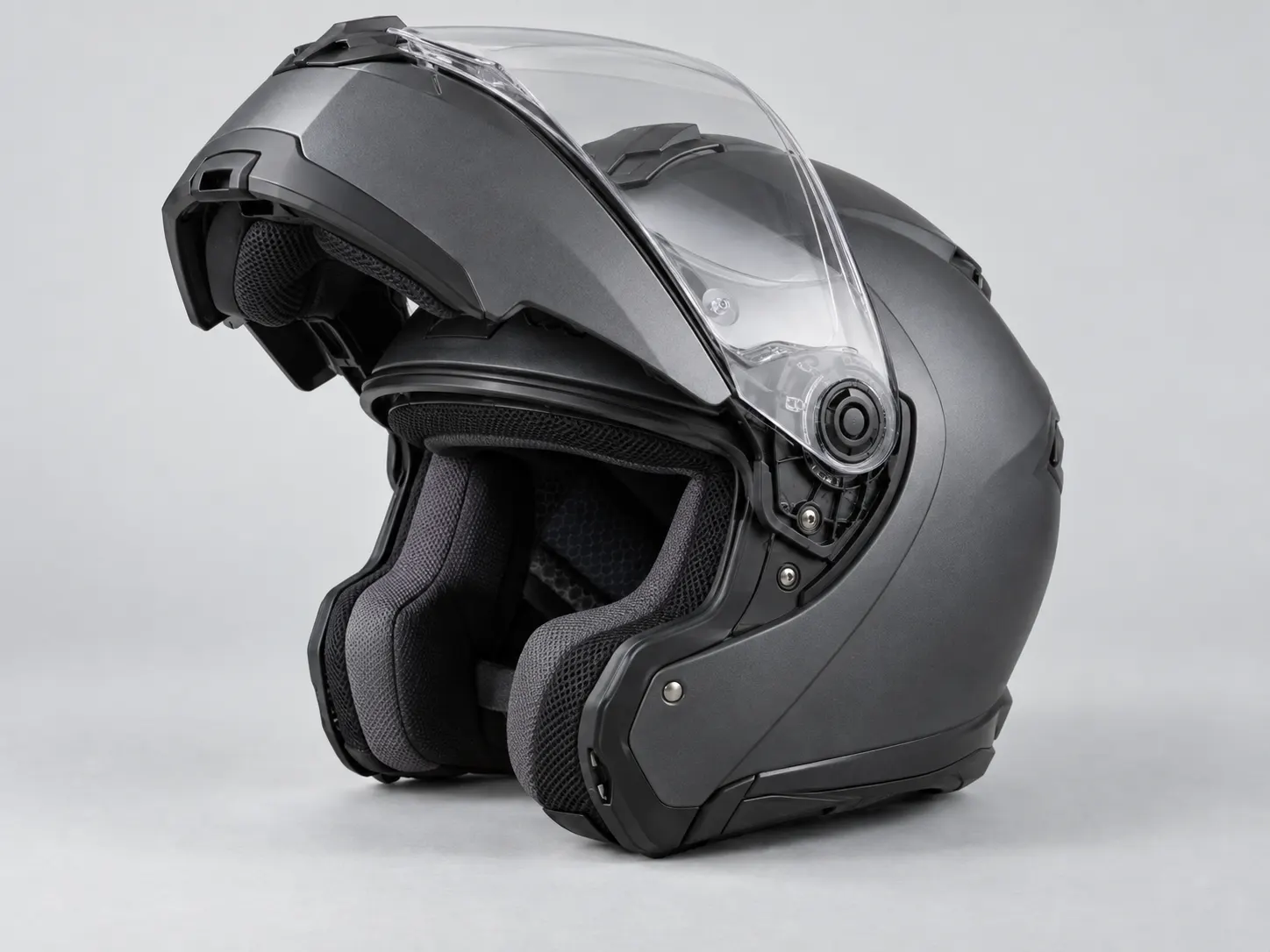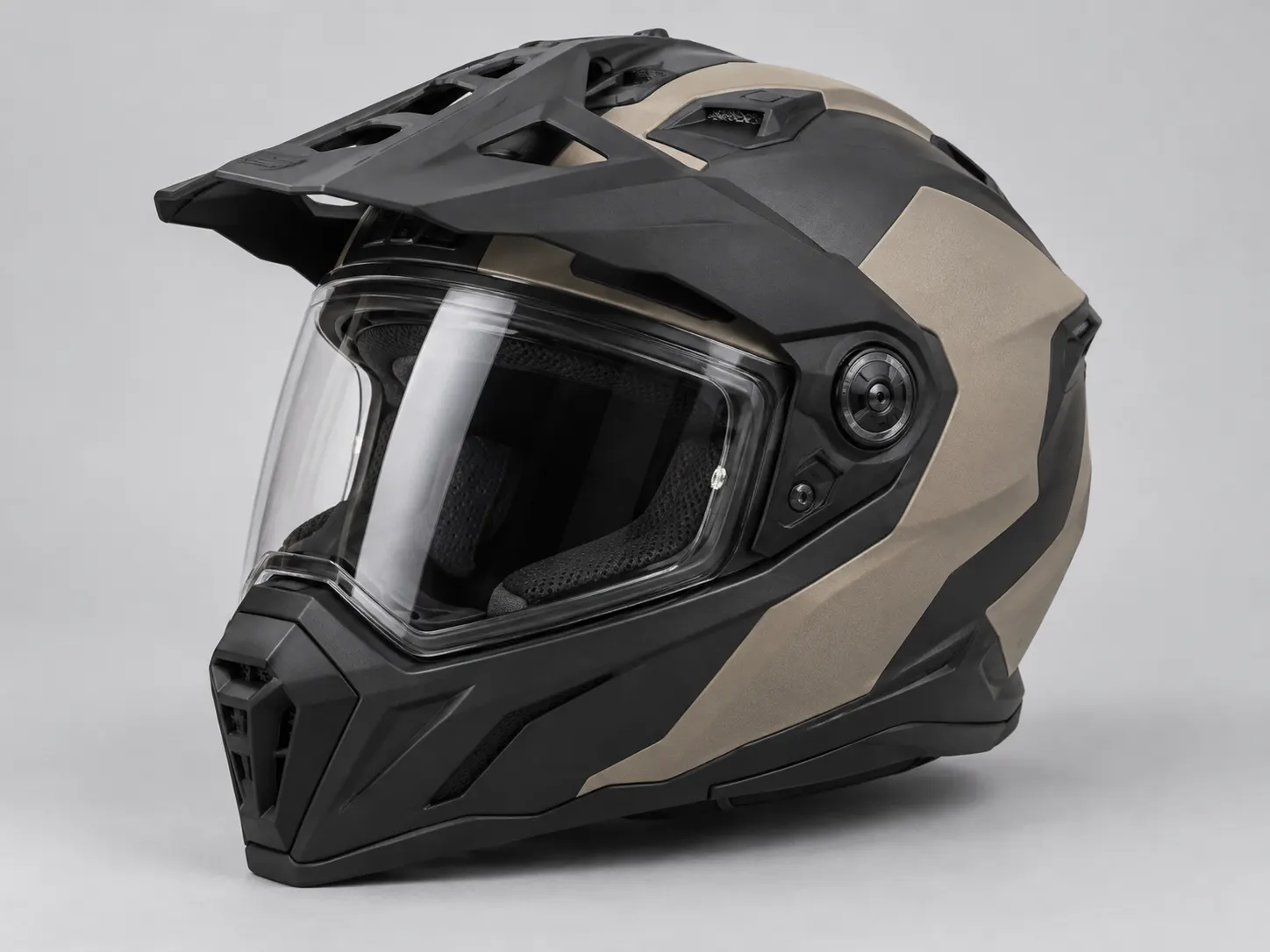
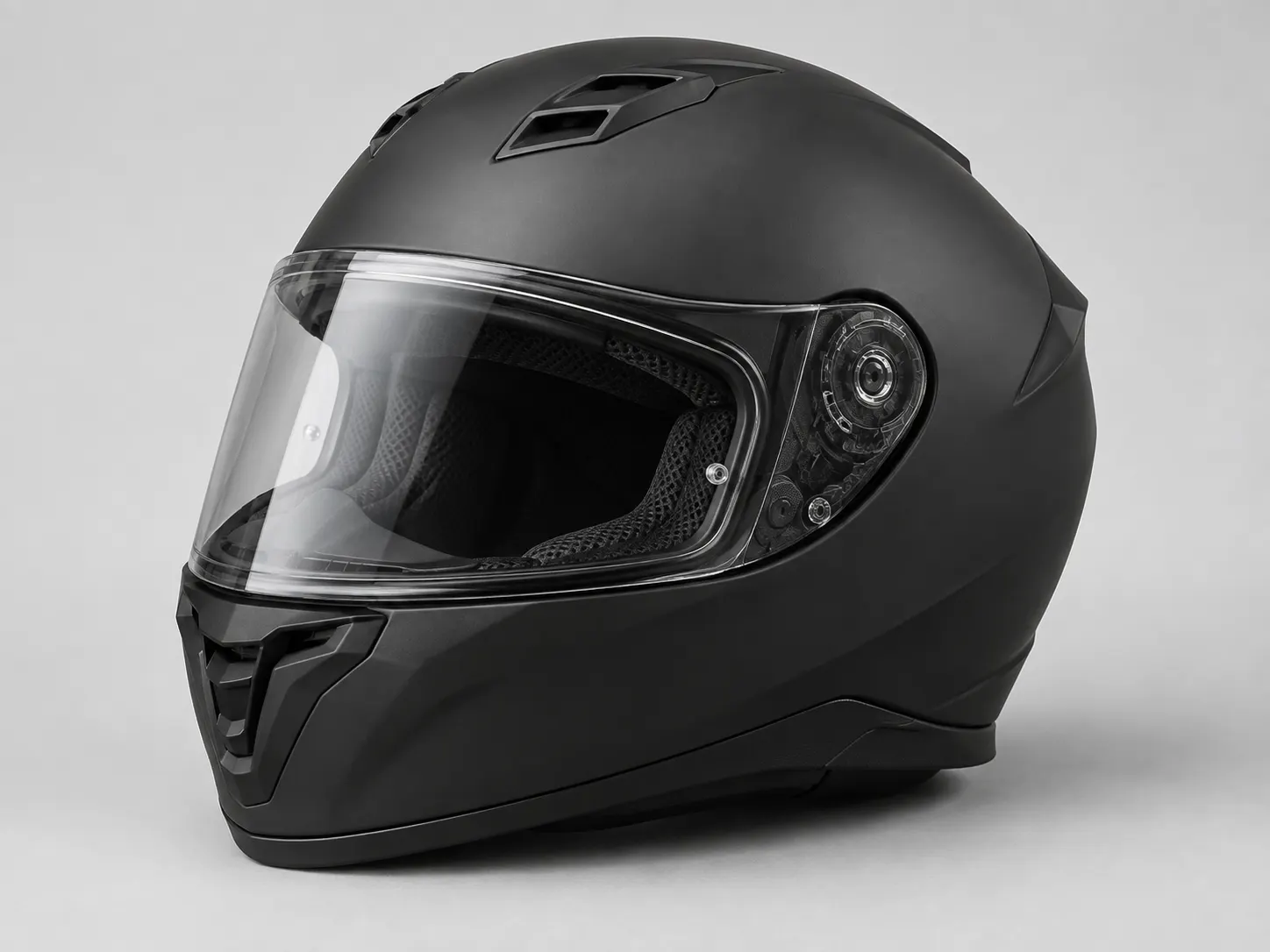
Illustrative image—not the exact model.
Both are fixed-chin full-face helmets, but this pair uses different regional records. The practical fitting comparison is between the RF-1400’s CWR-F2 shield and the RX-7V EVO’s VAS mechanism, together with each helmet’s contact around your crown and cheeks.
The differences at a glance
| Feature | Shoei RF-1400 — US | Arai RX-7V Evo — EU |
|---|---|---|
| Source version | US | EU |
| Shell | AIM+ | PB-SNC2 |
| Documented approval | DOT FMVSS 218, Snell M2025D | ECE 22.06 |
| Fastening | Not documented | Double D-ring |
| Visor system | CWR-F2; Pinlock Evo lens in the cited package | Variable Axis System (VAS) |
| Manufacturer weight | Size-specific weight not confirmed | Size-specific weight not confirmed |
Versions compared: RF-1400 specifications here are US-specific; RX-7V EVO specifications are European. They are not interchangeable regional alternatives. NXR2 and Corsair-X approvals are not transferred to these columns. Confirm availability and the label required for your intended use before buying across markets.
How to choose between them
If shopping in the United States
Start with the RF-1400’s actual label and package, then compare US-market alternatives such as the EXO-R1 Air Raven. A European RX-7V EVO listing does not establish US approval.
If shopping in Europe
Use the RX-7V EVO’s European specification and try another documented European model, such as Quantic. Treat an imported RF-1400 as a separate approval and support check.
During a fitting
Have the dealer demonstrate both visor mechanisms. Check visibility in your normal riding posture and assess stable contact before considering shell terminology. No matched-size weight or noise test is available here.
Build your shortlist
Start with our fit checklist, then compare the actual size, equipment and local support available for each model.
Open these versions in the comparison tool.