a person wearing a helmet and sitting on a motorcycle

Dual-Sport Motorcycle Helmet Buyer’s Guide 2026

Dual-sport helmets have to work on the motorway and on the trail, with goggles or a visor. Our complete buyer's guide explains the design trade-offs and how to choose the right one for your road-to-dirt split.

Dual-sport helmets occupy the most demanding design space in motorcycling — they have to work on the motorway and on a gravel trail, with goggles or with a visor, at 80mph and at walking pace through technical terrain. No single helmet does all of this perfectly, which is why understanding the trade-offs is essential before you buy. This guide explains what makes a dual-sport helmet different, the four main design approaches, and how to choose the right one for your road-to-dirt split.

What Makes a Dual-Sport Helmet Different

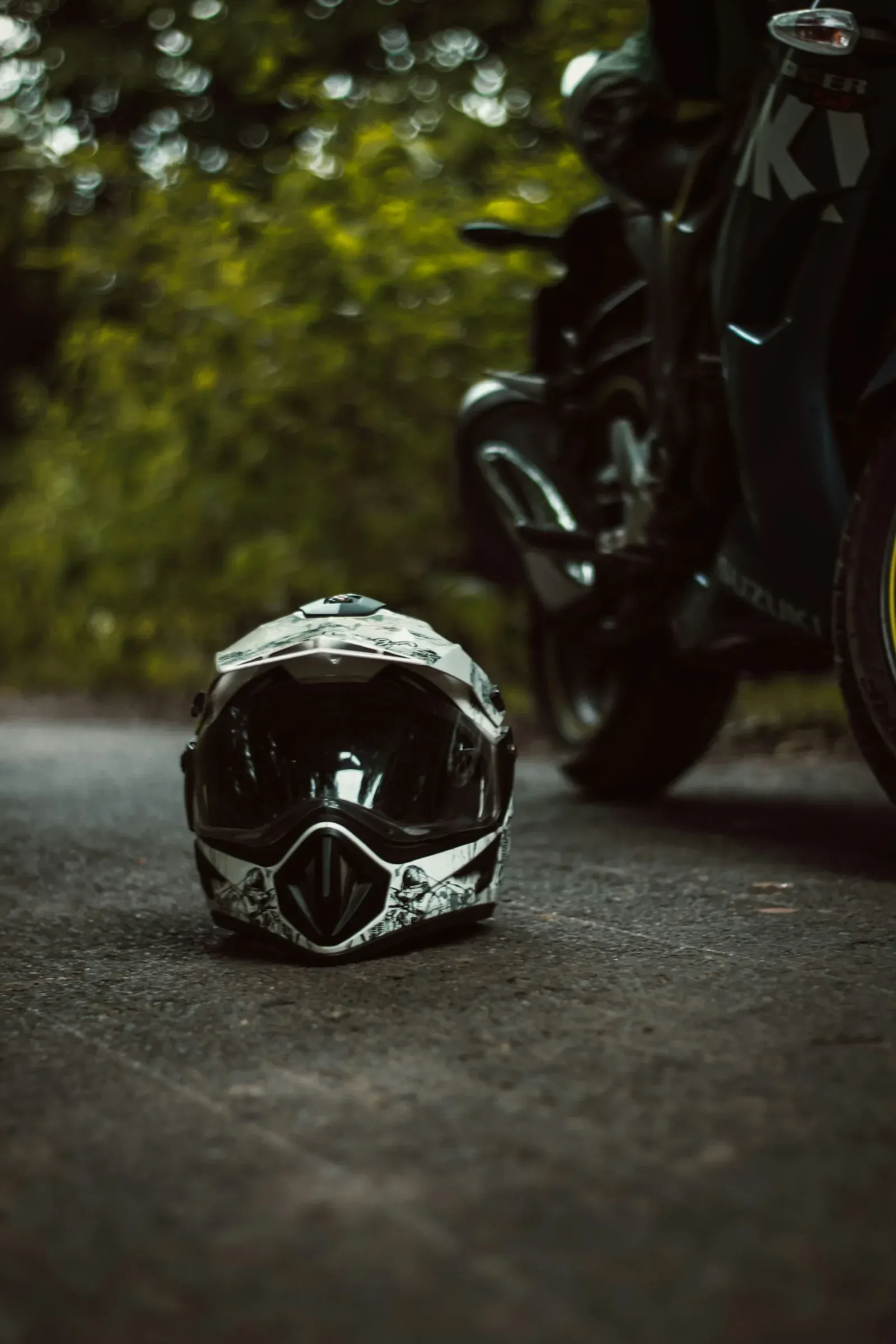
A dual-sport (also called adventure or ADV) helmet combines elements of full-face road helmets and motocross helmets. The defining features are a peak to block sun and roost, a larger eye port that accommodates goggles as well as a visor, more aggressive ventilation than a road helmet, and often a more pronounced chin bar for airflow during low-speed off-road exertion. The result is more versatile than either a pure road or pure off-road lid — but it makes compromises a dedicated helmet would not.

The Four Design Approaches

  • Road-biased ADV — prioritises motorway comfort, noise, and a quiet aerodynamic peak. Best for riders mostly on tarmac with occasional graded trails.
  • True 50/50 — genuinely balanced, with convertible features like a removable peak and switchable visor/goggle setups. The Klim Krios Pro is the benchmark.
  • Off-road-biased ADV — prioritises ventilation and goggle use with a motocross-derived shell, accepting more road noise as a trade-off. The Bell MX-9 Adventure MIPS sits here.
  • Pure off-road crossover — essentially a motocross or enduro helmet used for adventure, like the Fox Speedframe Pro. Maximum ventilation but limited road usability and often no road certification.

Key Features to Evaluate

Peak aerodynamics. The peak is the dual-sport signature feature and its biggest compromise. At motorway speeds, a poorly designed peak catches wind and causes head buffeting and neck fatigue. The best designs either have aerodynamically optimised peaks or allow you to remove the peak entirely for road sections. If you do significant motorway mileage, peak aerodynamics should be a primary concern.

Visor and goggle compatibility. True dual-sport helmets let you run a flip-down visor for road use and switch to goggles for dirt. The eye port needs to be large enough to fit goggles comfortably. Always check that your preferred goggles fit the specific helmet before buying.

Ventilation. Off-road riding at low speeds generates far more body heat than motorway cruising, so dual-sport helmets need aggressive ventilation. The Klim Krios Pro and Bell MX-9 Adventure both excel here — see our hot weather helmet guide for more.

Weight. Off-road riding involves constant head movement, so a lighter helmet reduces neck fatigue significantly over a long day. The Klim Krios Pro ultralight composite shell (~1,290g) is a genuine advantage here.

Noise. This is where dual-sport helmets compromise most. The peak, larger eye port, and aggressive venting all generate wind noise. Even the best are louder at motorway speeds than a dedicated road lid — earplugs are essential for significant tarmac mileage.

Certification: Do Not Overlook This

For road-legal use, your dual-sport helmet must carry ECE 22.06 (or DOT in the US) certification. Many pure off-road and enduro crossover helmets are not road certified. The Fox Speedframe Pro, for example, is an excellent off-road helmet but is not ECE 22.06 road certified, which limits its legal road use. Always confirm certification before buying if you intend to ride on public roads. For a full explanation, see our helmet certification guide.

How to Choose Based on Your Split

80% road / 20% off-road: Choose a road-biased ADV helmet or even a touring full-face like the Shoei GT-Air 3. A road-focused helmet you wear comfortably for hours beats a compromised dual-sport you merely tolerate.

50% road / 50% off-road: This is the true dual-sport sweet spot. The Klim Krios Pro is our top recommendation — its aerodynamic peak, excellent ventilation, ultralight shell, and ECE 22.06 certification make it genuinely capable in both environments.

20% road / 80% off-road: Lean toward an off-road-biased helmet like the Bell MX-9 Adventure MIPS, which prioritises the ventilation and goggle-friendliness hard off-road riding demands, while still carrying road certification for tarmac sections between trails.

Common Mistakes to Avoid

  • Buying off-road-biased for a road-heavy split. The aggressive ventilation and peak that make an off-road helmet great on dirt make it loud and fatiguing on the motorway.
  • Ignoring noise. Dual-sport helmets are universally louder than road helmets. For serious motorway miles, factor in earplugs and choose a helmet with a removable or aerodynamic peak.
  • Overlooking certification. Some adventure-styled helmets are not road legal. Always confirm ECE 22.06 or DOT certification for road use.
  • Not checking goggle fit. If you plan to run goggles off-road, test that they fit the helmet eye port before committing.
  • Choosing on looks alone. A helmet that does not match your actual riding split will disappoint regardless of how good it looks.

The Bottom Line

The best dual-sport helmet is the one that matches your real road-to-dirt split — not your aspirational one. Be honest about where you actually ride. For most adventure riders who genuinely split their time, the Klim Krios Pro represents the best balance of capability, weight, and refinement. For off-road-heavy riders, the Bell MX-9 Adventure MIPS delivers the ventilation and goggle-friendliness that matters most. And if you barely leave the tarmac, a dedicated touring helmet will serve you better than any compromise dual-sport. Browse all our helmet reviews to compare the full range.