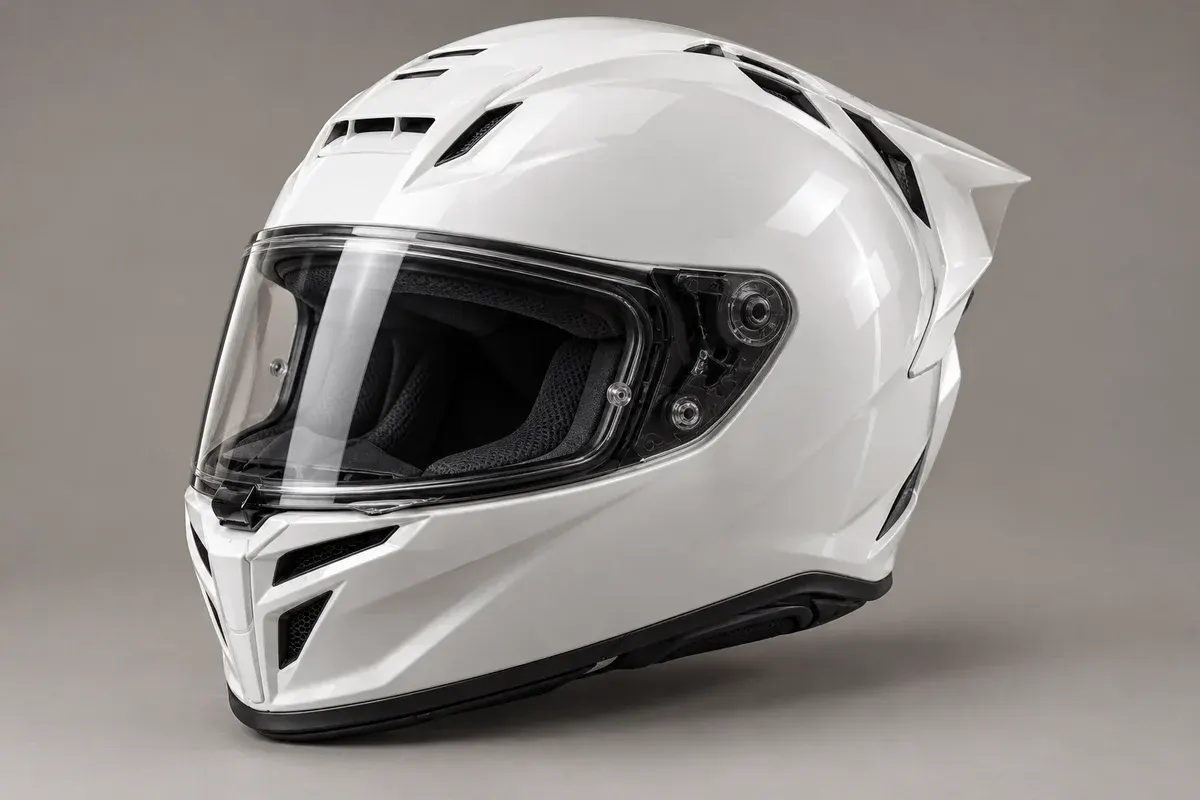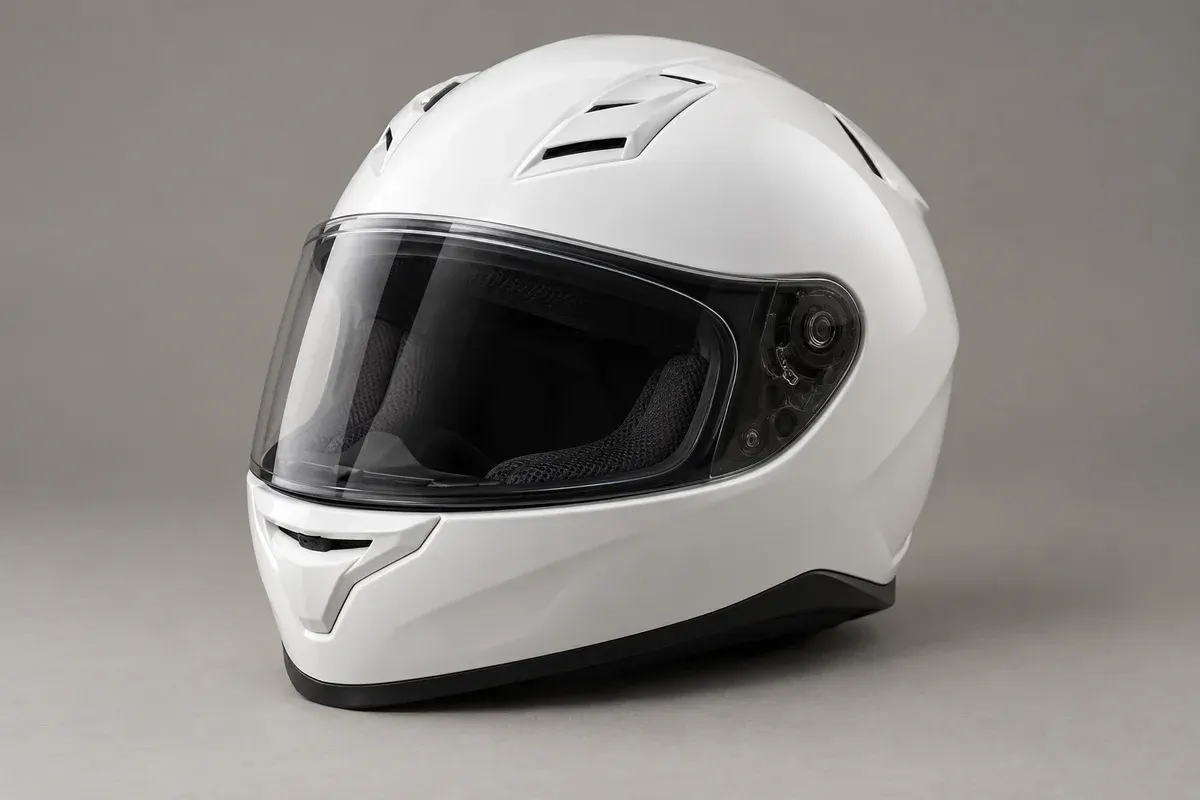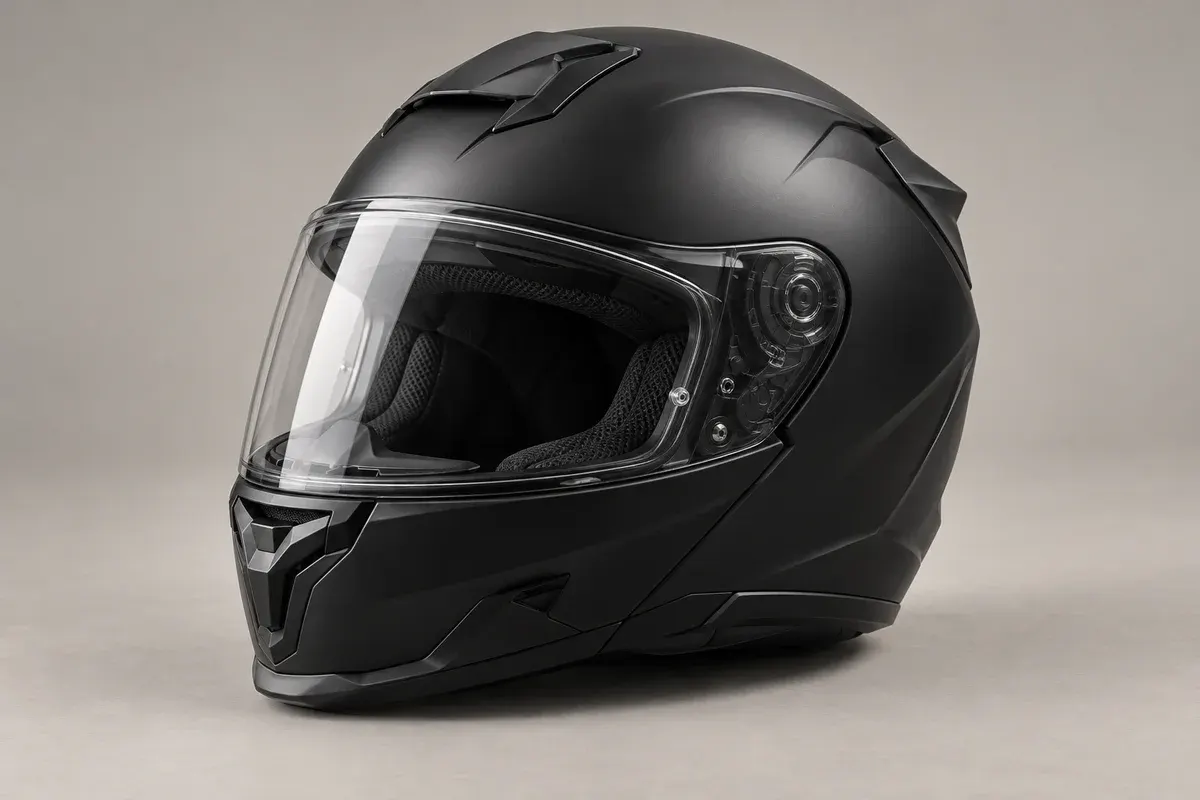
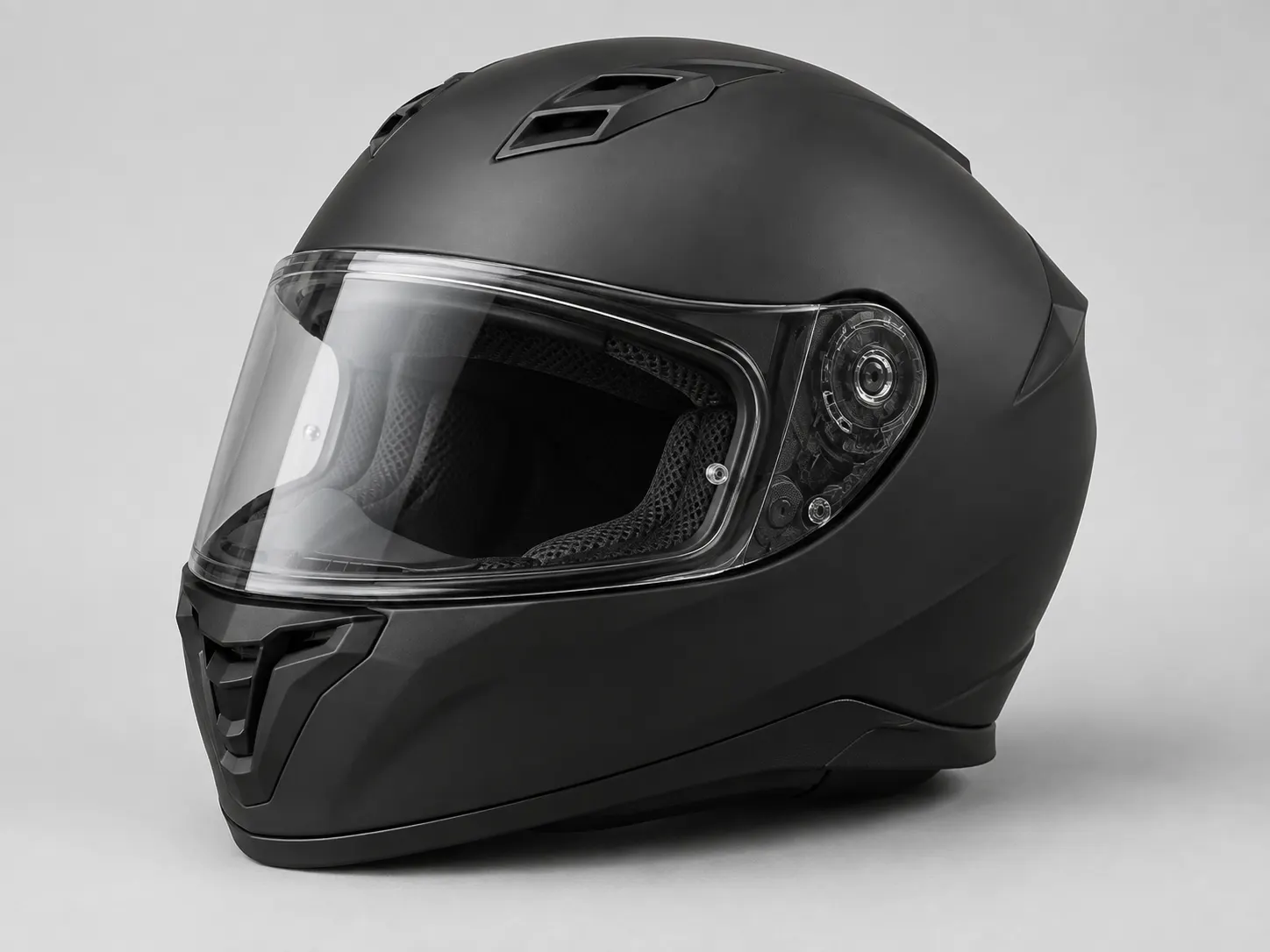
Illustrative image—not the exact model.
HJC RPHA 71 Review
By Jack Rydell
Our take: The HJC RPHA 71 is worth a fitting if you want a full-face touring helmet with an internal sun visor and the option to add integrated communications. Compare it with the i71 to decide whether its different shell construction and interior suit you well enough to justify the complete purchase cost.
This review covers the standard US RPHA 71. It is based on manufacturer documentation, with no hands-on noise, ventilation or comfort measurements. RPHA 71 Carbon and RPHA 72 are separate models.
HJC RPHA 71 at a glance
- Shell: PIM Evo composite construction.
- US approval: DOT FMVSS 218, as listed by HJC.
- Sun visor: internal, with multi-step adjustment.
- Main visor: push-and-release locking mechanism.
- Communications: SMART HJC 50B or 21B, sold separately.
- Fitting adjustment: HJC lists interchangeable cheek pads; have a fitter confirm the approved configuration for your size.
See the regional specifications. Size-specific weight and fastening remain unverified in our US source record.
Who should consider it
Put the RPHA 71 on your shortlist for commuting and longer road journeys if changing light makes a sun visor useful and you want a communication system that fits the helmet’s preparation. Take your normal glasses and gloves to the fitting, especially if you expect to ride for hours at a time.
If quietness or low weight is your deciding factor, seek relevant measurements and compare the actual size and configuration you will wear. The feature list alone cannot settle either question.
Features and trade-offs
PIM Evo shell: a concrete difference from the i71
HJC’s PIM Evo uses a mixture of reinforcing materials, while the i71 uses polycarbonate composite. This gives you a specific construction difference to compare; it does not by itself prove that the RPHA 71 offers better protection or feels lighter on your head.
Assess balance with the helmet fastened and any intended communication equipment accounted for. Compare the complete configuration rather than a weight figure for an unidentified size.
Adjustable sun visor and main visor lock
HJC’s multi-step system allows the internal sun visor position to move up to 10 mm closer to the face. At a fitting, try the available positions with your glasses and check nose clearance before settling on an adjustment.
Work the main visor latch with your usual gloves. Check how easily you can locate and release it, then fully close it again. For wet-weather preparation, confirm the exact shield and compatible anti-fog insert with the seller, including what is supplied in the box. Our visor and anti-fog guide explains what to compare.
SMART HJC preparation is not an included intercom
HJC identifies the SMART HJC 50B and 21B as compatible with the RPHA 71. Both are separate purchases. The 50B lists Mesh intercom; choose a system around the functions and connection methods your riding group actually uses.
Ask about the fitting kit, speaker placement and installation before buying. If you already own a different intercom, check its mounting requirements rather than assuming that built-in preparation guarantees compatibility. Our Bluetooth and intercom guide covers the practical questions.
Interior adjustment needs a fitting
HJC describes interchangeable cheek pads for this model. Ask a fitter to identify compatible pads for your exact helmet size and to repeat the retention checks after any approved change. Padding adjustment should support a secure fit, rather than compensate for the wrong shell fit.
What to check at a fitting
- Fit and retention: start with HJC’s size chart and follow its fitting instructions. Allow time to notice concentrated pressure and check that the fastened helmet stays securely positioned.
- Sun visor clearance: try the adjustment range with your glasses. Check both the lenses and the bridge of your nose.
- Gloved operation: open and lock the main visor and locate the controls you will use while riding.
- Speaker comfort: assess the intended speaker placement with the fitter. Never cut or compress protective material to make room.
Our helmet fit and sizing checklist provides the full sequence. Record your helmet size and approved pad configuration.
Common buying questions
Is it quieter than the i71?
This review cannot establish that. HJC describes aerodynamic and noise-development work, but we have no controlled comparison of the two helmets. Your motorcycle, screen, riding position and fit also matter when assessing noise.
Is the US helmet ECE approved?
The US source used here lists DOT. Confirm the approval label on the exact helmet rather than transferring European specifications to a US purchase.
Should I buy a discounted RPHA 71?
Compare the total cost after adding the communication unit, any required visor insert and fitting adjustments. Check the manufacture label, condition, seller’s return terms and availability of compatible replacement parts. A discount is useful only if the helmet fits and the package meets your needs.
Two alternatives to try
- HJC i71 — US version: compare its polycarbonate shell with the RPHA 71’s PIM Evo construction. Both offer an internal sun visor and optional second-generation SMART HJC equipment, so the fitting and complete price are particularly useful comparisons.
- Sena Stryker — US version: consider it if you prefer a helmet with communications integrated into the package. Compare the included system’s group compatibility and the actual helmet fit against an RPHA 71 plus a separate device.
Compare these three helmets with the US version labels visible. Our full-face buying guide offers a broader shortlist.
Is the RPHA 71 worth considering?
Yes, for riders who want its combination of touring features and optional communications, provided the fitting works. Try it alongside the i71 with the same glasses and planned accessories. Choose on the fit, controls and complete package rather than assuming that shell material or a premium model name guarantees a better ride.
Sources
- HJC US — RPHA 71: construction, sun visor, interior and US approval listing.
- HJC US — SMART HJC 50B: RPHA 71 compatibility and communication features.
- HJC US — i71: alternative construction and equipment.
- Sena — Stryker: integrated communication alternative.
- HJC US — Proper Fit: manufacturer fitting guidance.
Helmet specifications
Regional specifications are kept separate. Unknown values are not estimated.
US version
- Model / market
- RPHA 71 · US
- Manufacturer-listed certifications
- DOT FMVSS 218
- Shell
- PIM Evo
- Internal sun visor
- Yes
- Fastening
- Not verified
- Manufacturer weight
- Not verified
US RPHA 71 listing, not RPHA 72 or RPHA 71 Carbon. EU approvals and unspecified weight are not inferred.
Certifications are not comparative safety scores. Check the label on the exact helmet; production versions and market approvals can differ.