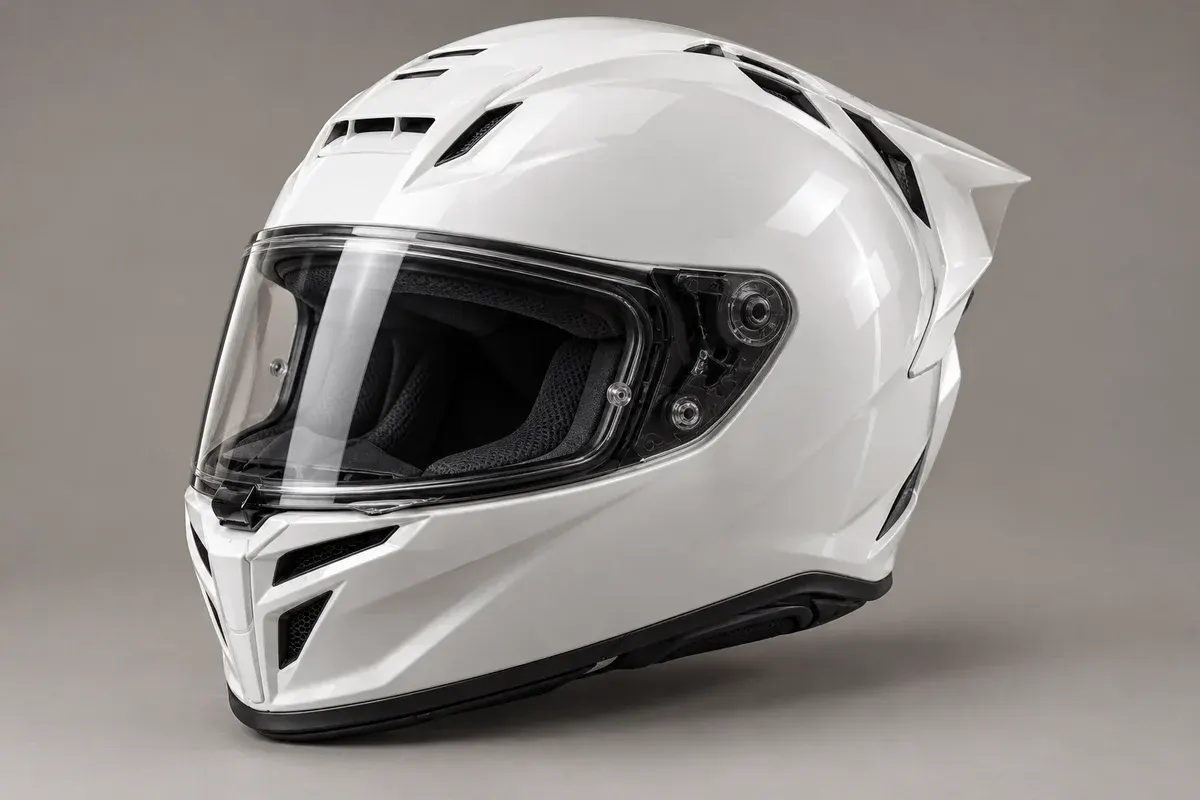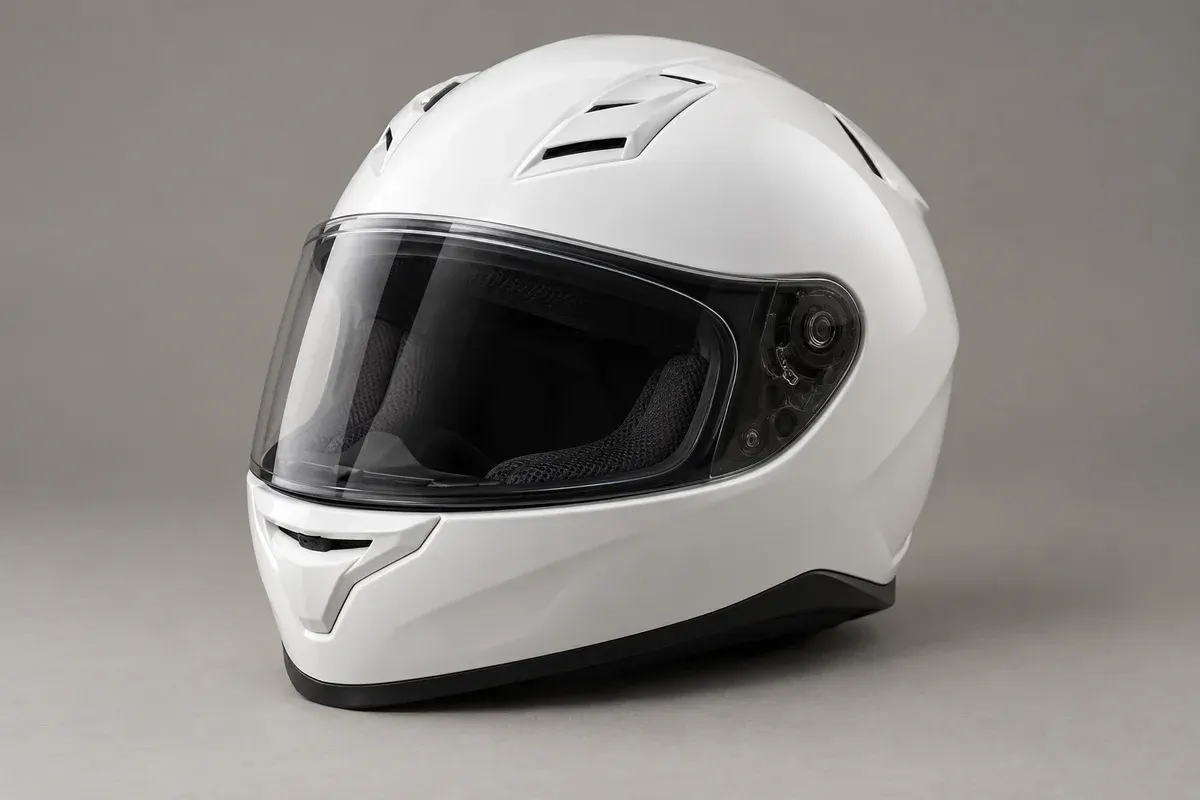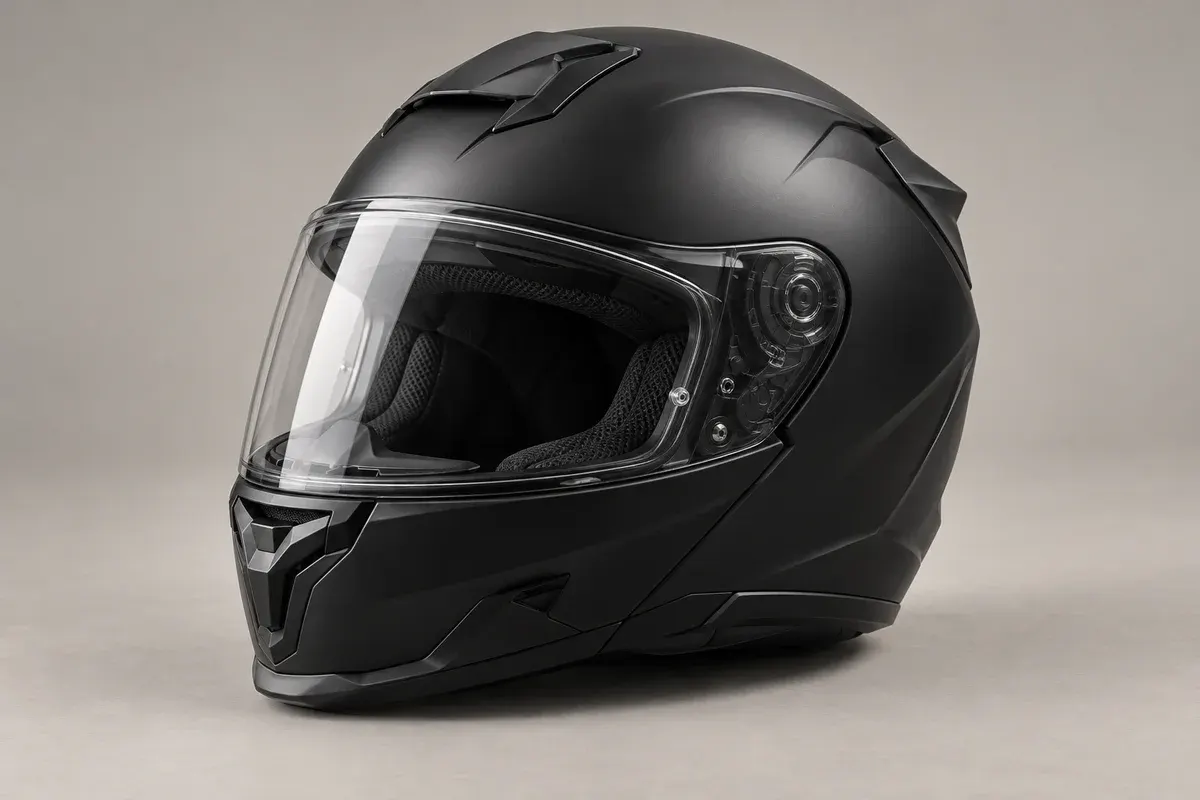
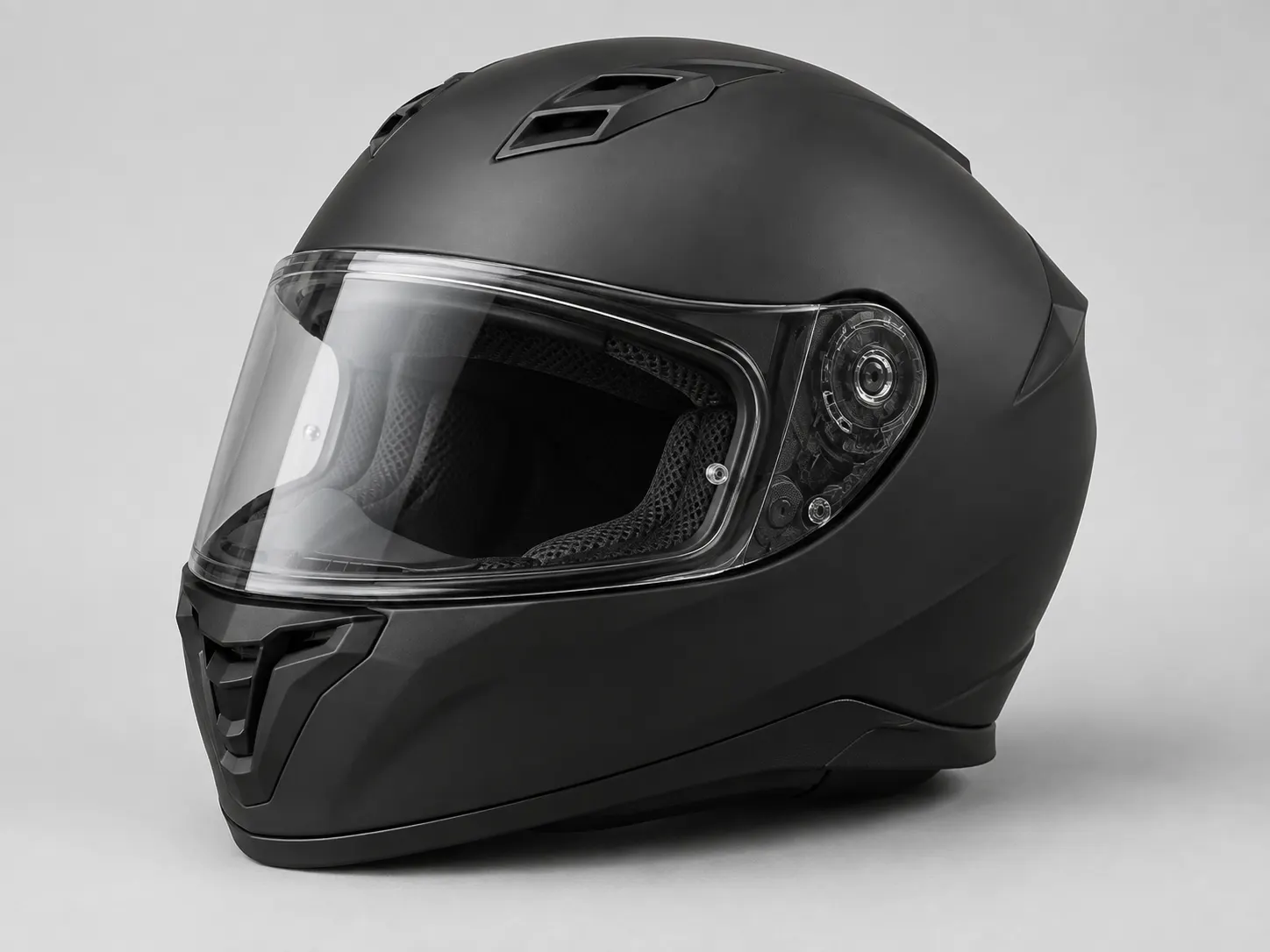
Illustrative image—not the exact model.
HJC i71 Review
By Jack Rydell
Our take: The HJC i71 belongs on a commuter or touring shortlist if you want a full-face helmet with an internal sun visor and optional integrated communications. Its appeal is everyday equipment; the deciding factor is whether it fits securely with your glasses and intended speakers.
This review covers the US i71 and uses manufacturer documentation. We have not road-tested it or measured noise, ventilation or long-distance comfort.
HJC i71 at a glance
- Construction: Advanced Polycarbonate Composite full-face shell.
- US approval: DOT, as listed by HJC.
- Visibility: HJ-38 Pinlock-ready main shield and adjustable HJ-V12 internal sun shield.
- Communications: SMART HJC 50B or 21B, purchased separately.
- Before ordering: confirm insert inclusion, size availability and the complete accessory cost.
See the regional specifications. Size-specific weight, fastening and shell-size allocation remain unverified in our US source record.
Who should consider it
Try the i71 if you commute through changing light or want a road-touring helmet with a sun visor and a documented communication upgrade. If low weight or a particularly quiet ride leads your requirements, compare actual helmets and relevant test evidence before deciding; this review cannot establish an advantage in either.
Features and trade-offs
Shell and US approval
HJC lists an Advanced Polycarbonate Composite shell and DOT compliance for the US model. That label does not establish an ECE approval for a different market or a comparative safety score. Check the label on the helmet you will buy; our helmet laws by country guide helps identify the next local checks.
Main visor and internal sun visor
HJC identifies an HJ-38 Pinlock-ready face shield with a push-and-release lock, plus an adjustable HJ-V12 internal sun shield. Pinlock-ready describes compatibility; check whether the appropriate insert is included in your exact package.
During a fitting, open, close and lock the main visor with your usual gloves. Lower the sun visor while wearing your glasses and check clearance around the lenses and nose. Repeat the movement several times rather than judging the mechanism from one quick try.
Plan your setup for changing light and wet weather. The sun visor and an anti-fog insert solve different problems; our visor and anti-fog guide explains the choices.
Communication preparation
HJC explicitly lists the SMART HJC 50B and 21B as compatible with the i71. Both are separate purchases; confirm the installation kit and speaker fit before ordering.
Include the device in your total budget. If you already own an intercom, ask about its installation requirements before assuming that preparation for one system guarantees compatibility with another. See our Bluetooth and intercom guide for questions to ask.
What to check at a fitting
- Establish fit first. Start with HJC’s size chart, follow its retention checks and allow time to notice concentrated pressure. Do not size up simply to accommodate glasses or speakers.
- Test both visors. Wear your glasses, lower the sun visor and work the main visor lock with gloves. Check nose and lens clearance.
- Check the intended communication setup. Assess speaker placement with the fitter; do not modify protective material. Record any manufacturer-approved padding changes.
Use our helmet fit and sizing checklist for the full fitting sequence.
Common buying questions
Is a Bluetooth unit included?
No. Communication preparation is built into the design, but the compatible device is a separate purchase.
Does Pinlock-ready mean an insert is included?
No. It identifies shield compatibility. Check the exact package and matching insert before ordering.
Can I use European i71 specifications for the US helmet?
Use the documentation and label for the version you buy. Do not carry over approvals, fastening or weight from another market.
Before buying: check the complete package
- Confirm the US i71 model and approval label.
- Check the supplied visor, any anti-fog insert and available replacement parts.
- Ask which approved cheek pads or liners can be fitted to your size.
- Confirm communication hardware and installation costs.
- Read the seller’s return conditions before removing labels or installing accessories.
For everyday care, give the helmet a stable, dry storage location and follow HJC’s cleaning instructions. Our helmet storage guide covers practical options at home and away.
Two alternatives to try
- HJC RPHA 71 — US version: compare its PIM Evo composite shell with the i71’s polycarbonate construction while retaining an internal sun visor and second-generation SMART HJC compatibility. This material difference alone does not establish better protection or comfort.
- Icon Airflite — US version: worth a fitting if its styling and internal DropShield appeal to you. Establish the exact version and assess its visor controls and glasses clearance alongside the i71.
Compare these three helmets, keeping the US version labels visible. For a broader shortlist, use our full-face helmet buying guide.
Is the HJC i71 worth considering?
Yes, if its sun visor and communication options suit your daily riding and the helmet fits securely with the equipment you use. Choose after a fitting that includes your glasses, gloves and intended speakers. A feature list cannot settle comfort, and this research does not establish that the i71 is quieter, lighter or safer than the alternatives.
Sources
- HJC US — i71 specifications: shell, DOT listing, visor systems and communication preparation.
- HJC US — SMART HJC 50B and i71 compatibility.
- HJC US — RPHA 71: alternative shell construction and equipment.
- HJC US — Proper Fit: manufacturer fitting guidance.
Helmet specifications
Regional specifications are kept separate. Unknown values are not estimated.
US version
- Model / market
- i71 · US
- Manufacturer-listed certifications
- DOT
- Shell
- Advanced polycarbonate composite
- Internal sun visor
- Yes
- Fastening
- Not verified
- Manufacturer weight
- Not verified
US i71, not i72. European approval, fastening and size-specific weight remain unverified here.
Certifications are not comparative safety scores. Check the label on the exact helmet; production versions and market approvals can differ.