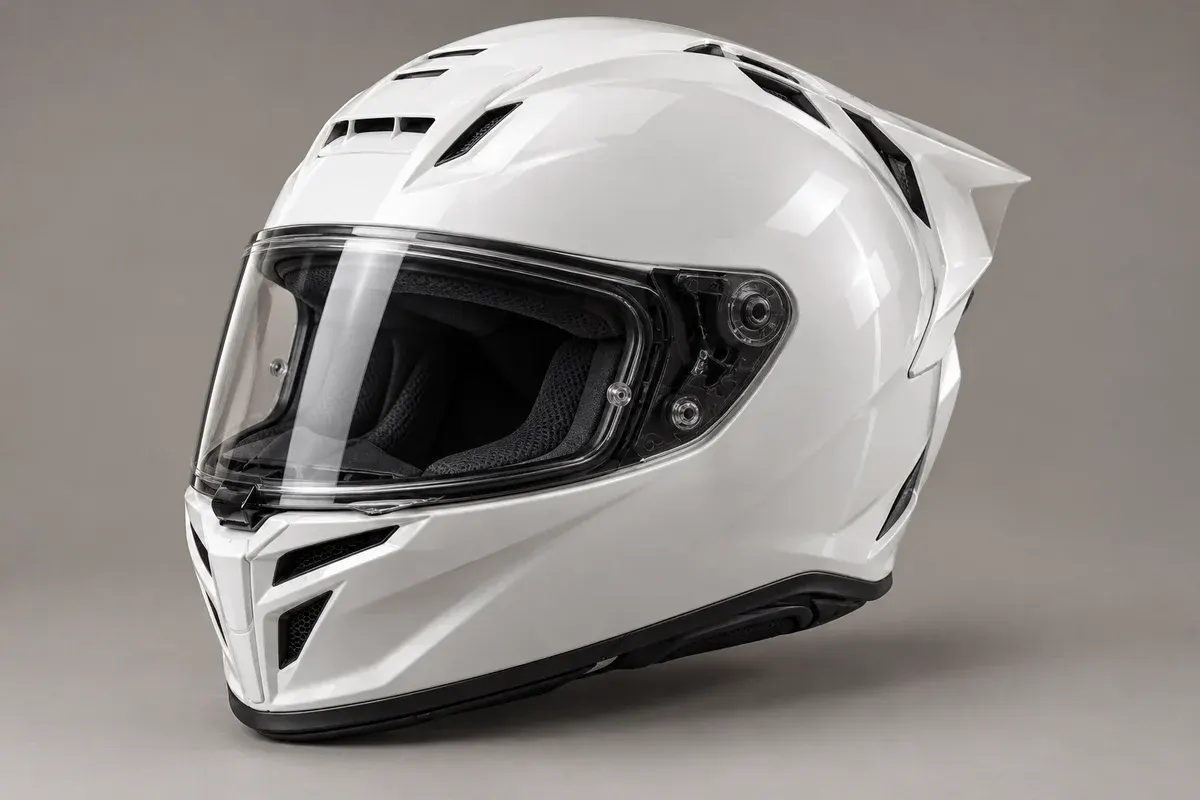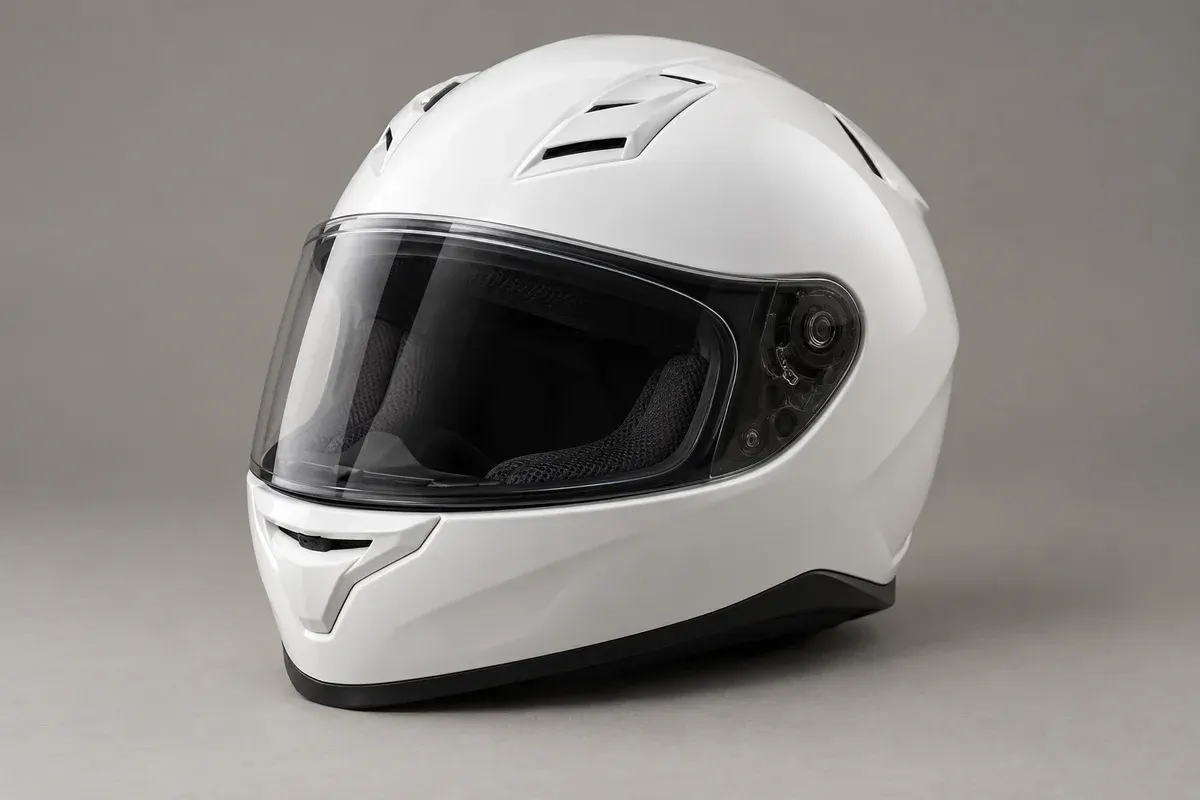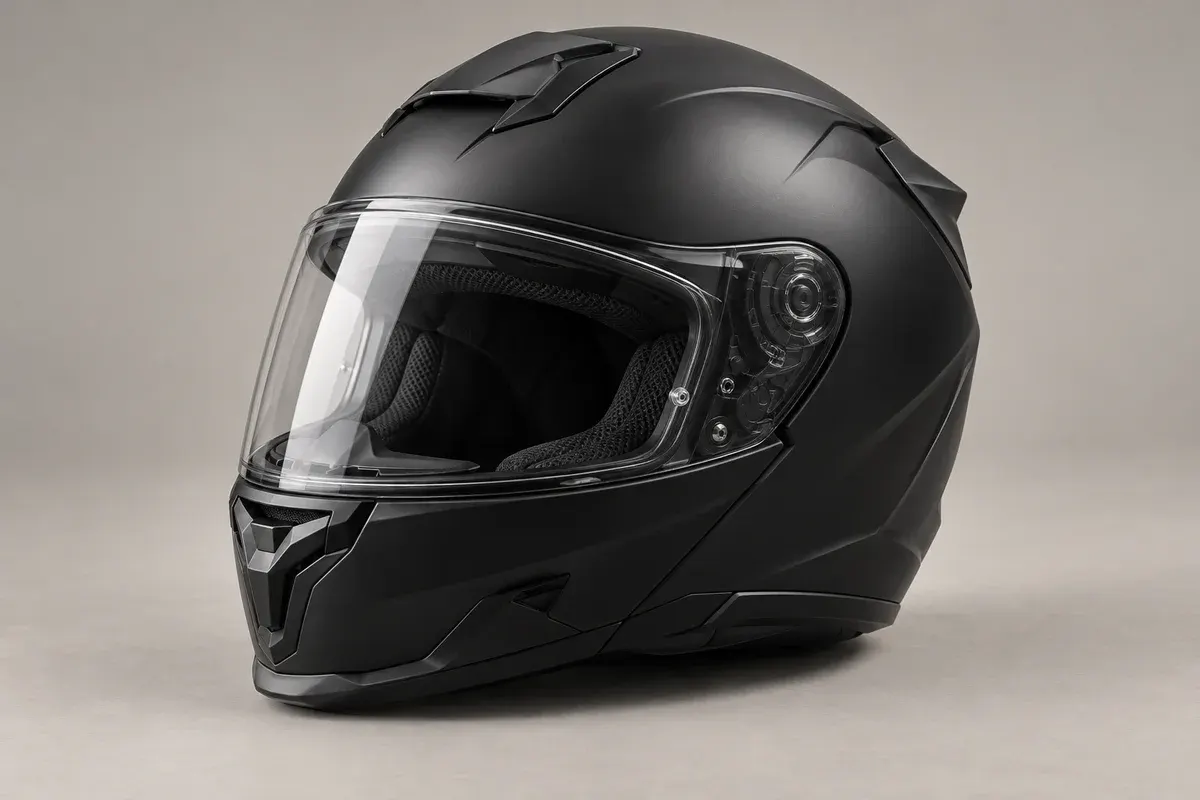
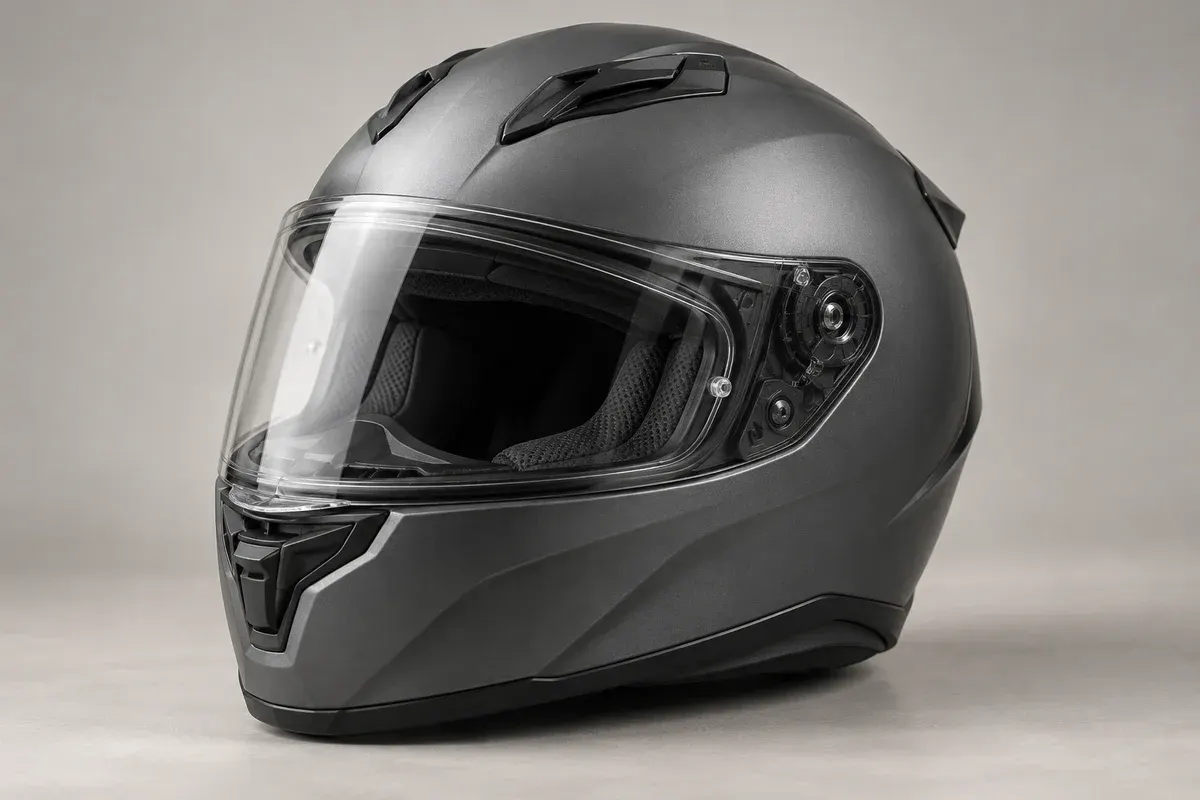
Illustrative image—not the exact model.
HJC i11 Review
By Jack Rydell
Our take: The HJC i11 is a useful fitting candidate for US riders seeking a full-face street helmet with a current Snell certification listing. Its strengths on paper are a size-specific M2025D listing, an HJ-38 shield system and emergency-release cheek pads. Decide after checking fit, visor operation and the cost of your intended accessories.
This is a manufacturer-sourced review of the US i11. We have not measured road noise, cooling or long-distance comfort, and specifications from the older i10 are not substituted here.
HJC i11 at a glance
- Construction: Advanced Polycarbonate Composite full-face shell.
- US approvals: HJC lists DOT; Snell’s M2025D active list includes XS, S, M, L, XL and 2XL.
- Sizing architecture: HJC lists three shell sizes and four EPS sizes.
- Visor: HJ-38, with an initial cracked-open position.
- Interior: glasses grooves and emergency quick-release cheek pads.
- Communications: Bluetooth-ready preparation; confirm the exact device and installation requirements.
See the US specifications. Fastening and size-specific weight remain unverified in our source record.
Who should consider it
Put the i11 on your shortlist if you want a straightforward full-face helmet for street riding and value a verifiable Snell model-and-size listing. It is also worth investigating when an event’s helmet policy names Snell M2025D, provided the organizer confirms acceptance of your exact helmet.
If an internal sun visor is essential, try the HJC i71 alongside it. If minimum weight or quietness is your main goal, seek measurements for the actual size and configuration you will wear; this review cannot establish an advantage in either.
Features and trade-offs
Snell M2025D: check the size and label
Snell lists the i11 as a full-face model in XS through 2XL. That establishes certification coverage for those listed sizes, rather than a comparative safety ranking or automatic permission to enter every track event.
Inspect the labels on the helmet you buy. For circuit use, send the model, standard and label details to the organizer before purchasing specifically for an event. Our track-day helmet requirements guide explains the checks to make.
Shell and EPS sizing
Three shell sizes and four EPS sizes describe HJC’s sizing architecture. They do not tell you which size fits your head or establish the external dimensions of a particular helmet. Start with a measurement, then assess crown contact, cheek support and retention in person.
HJ-38 visor and changing light
HJC describes a cracked-open shield position and promotes a SHADE X photochromic option. Confirm the shield supplied with your exact package; do not count the optional light-reactive shield as included equipment.
At the fitting, work the visor with your regular gloves. Check how positively it closes and how easily you can find the controls. For commuting in wet or cool conditions, ask which anti-fog insert matches the shield and whether it is supplied. Our visor and anti-fog guide explains how the options differ.
Interior and communication preparation
Glasses grooves are worth trying with your own frames: they do not guarantee clearance for every pair. Check the arms of the glasses, your ears and your view through the shield together.
Bluetooth-ready preparation does not mean a communication unit is included or that every mounting kit will fit. Confirm the exact system and speaker arrangement before ordering; do not assume i71-specific integrated hardware transfers to the i11. Our intercom guide gives a practical compatibility checklist.
What to check at a fitting
- Fit and retention: use HJC’s current chart as a starting point and follow its fitting instructions. Allow time to identify concentrated pressure; ask a fitter to assess unwanted movement.
- Glasses and gloves: bring both and operate the visor repeatedly, rather than checking helmet size alone.
- Speaker placement: assess your intended setup without cutting or compressing protective material.
- Exact configuration: record the size and any manufacturer-approved padding changes, then repeat the retention checks.
Use our fit and sizing checklist for the full sequence.
Before buying
- Verify the exact US model, size and certification labels.
- Confirm the supplied shield, optional photochromic shield and compatible anti-fog insert separately.
- Check replacement visor and liner availability with the seller.
- Include communication equipment and installation in the total cost.
- Read return conditions before removing labels or fitting accessories.
Two alternatives to try
- HJC C10 — US version: another full-face fitting candidate if you want to compare a simpler package. Check its own approval labels and equipment; the i11’s Snell listing does not apply to the C10.
- HJC i71 — US version: consider it when an internal sun visor and optional SMART HJC integration better match your daily riding. Compare the complete accessory setup and actual fit.
Compare these three helmets with the US versions selected. Our full-face buying guide offers a broader shortlist.
Is the HJC i11 worth considering?
Yes, if the fit works and its documented certification and equipment match your needs. The most useful next step is a fitting with your normal glasses and planned communication setup, followed by a check of exactly what is in the box. Choose the package you will actually use, rather than relying on the certification label to answer comfort or accessory questions.
Sources
- HJC US — i11: model specifications, sizing architecture, visor and interior.
- Snell — M2025D active certification list: i11 model and covered sizes.
- HJC US — i71: alternative sun visor and communication equipment.
- HJC US — Proper Fit: manufacturer fitting guidance.
Helmet specifications
Regional specifications are kept separate. Unknown values are not estimated.
US version
- Model / market
- i11 · US
- Manufacturer-listed certifications
- DOT FMVSS 218, Snell M2025D
- Shell
- Advanced Polycarbonate Composite
- Internal sun visor
- Not verified
- Fastening
- Not verified
- Manufacturer weight
- Not verified
Snell M2025D active list covers XS–2XL. Verify size and production label; no additional sizes inferred. Size-specific weight awaiting confirmation.
Certifications are not comparative safety scores. Check the label on the exact helmet; production versions and market approvals can differ.