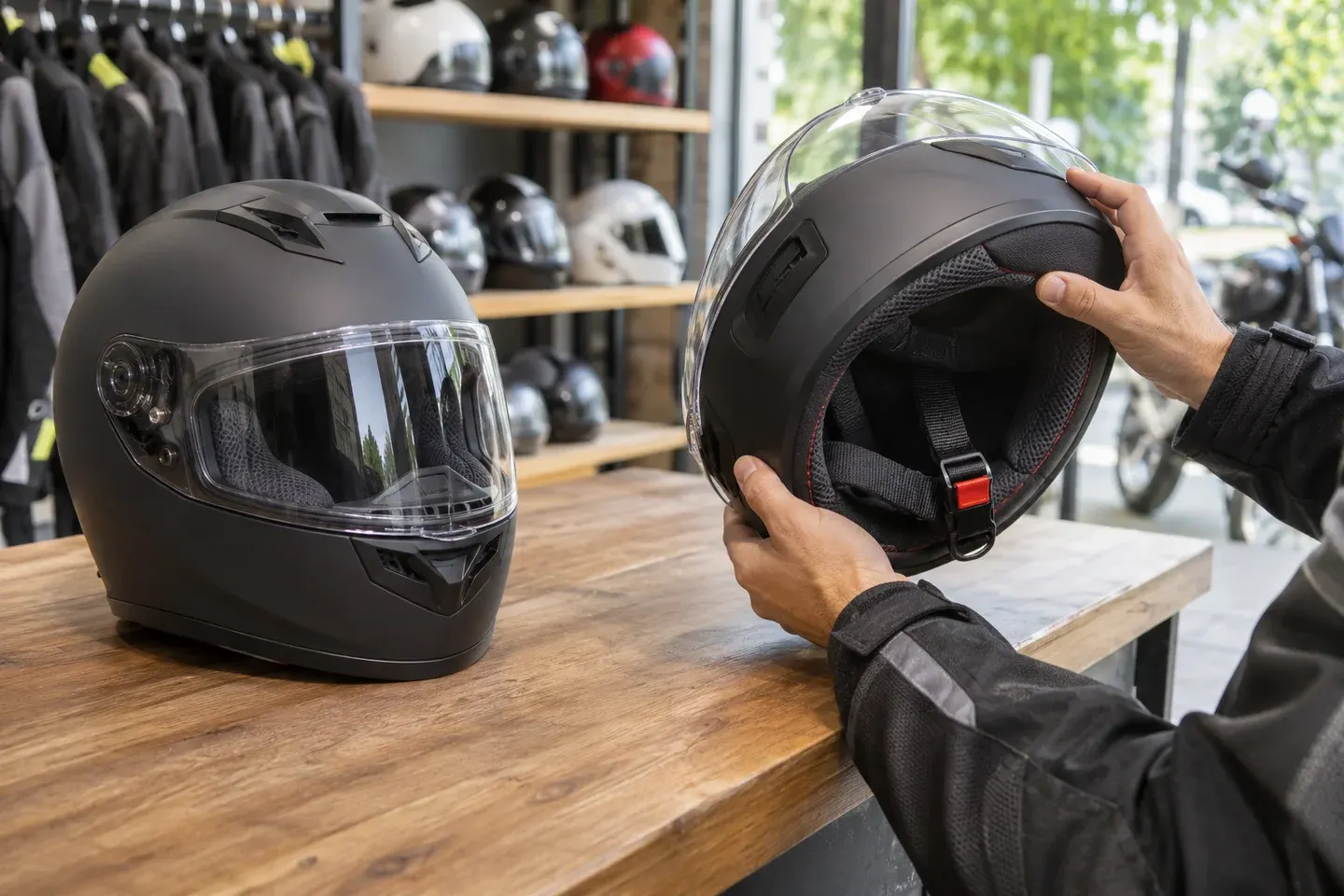
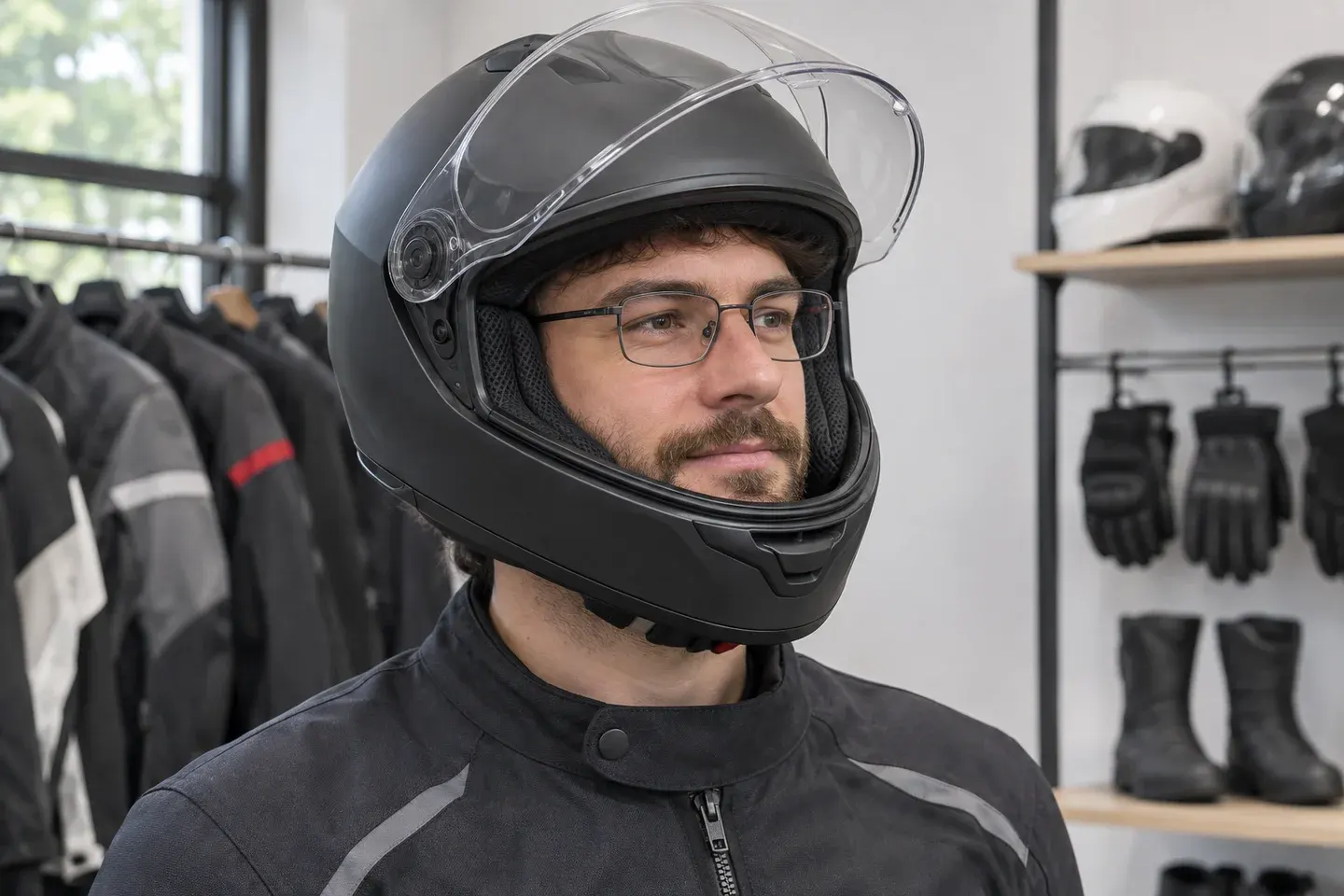
Bring the prescription glasses you actually ride in when you try on a motorcycle helmet. First check that the helmet fits securely on its own. Then fasten it and see whether your frames sit level, clear the visor and stay comfortable as you look around. If the frames only fit after you move up to a loose helmet, try a different helmet shape or a different frame.
Hero image: AI-generated illustration of a helmet fitting with prescription glasses.
Check the helmet before adding your glasses
Start with the manufacturer’s size chart and try the helmet without the frames. Check for even contact at the crown and follow the manufacturer’s retention instructions with the strap fastened. A concentrated pressure point that is already present without your glasses is a helmet fit issue. Our helmet fit and sizing guide walks through these checks.
Once the helmet fits, put the glasses on in the order recommended by the helmet maker. Try removing and reinserting them while stationary. You should be able to seat the frames without forcing the arms through the lining. A glasses channel can help, but its position needs to line up with your particular frames.
A fitting checklist for prescription glasses
- Check the temples and ears. Leave the helmet on long enough to notice whether one frame arm digs in, bends outward, or pushes an ear forward. If you use speakers, repeat the check with the intended setup.
- Check where the lenses sit. Look straight ahead and down toward where your instruments would be. The lenses should sit in their normal position. If progressive lenses shift upward as you close the helmet or turn your head, try another fit and ask your optician about frame options if needed.
- Close the clear visor completely. Watch for contact with the frame corners, bridge or lenses. If the helmet has an internal sun shield, lower it separately and repeat the clearance check.
- Repeat with your riding gloves. While stationary, practice the normal on-and-off routine. If the frames consistently snag, try another helmet or bring a second pair to compare.
Work out which surface is fogging
At a stop, raise the outer visor and see whether the haze moves with it or stays in front of your eyes. That helps distinguish visor fog from condensation on your glasses. A visor insert addresses the shield surface it covers. If your glasses are fogging, check that the vents are open as instructed, and ask your optician about treatments compatible with your lens coatings. Avoid applying a visor treatment to prescription lenses without checking compatibility.
Check your visor manual before combining tinted equipment. For example, Shoei’s CPB-1 and CPB-1V shield instructions caution against pairing tinted or mirrored shields with sunglasses or another light-reducing layer. Read the instructions for your exact combination and see our guide to visor inserts and tint for more context. If fog or tint compromises your view, stop somewhere safe before adjusting the setup.
Fixed chin bar or modular?
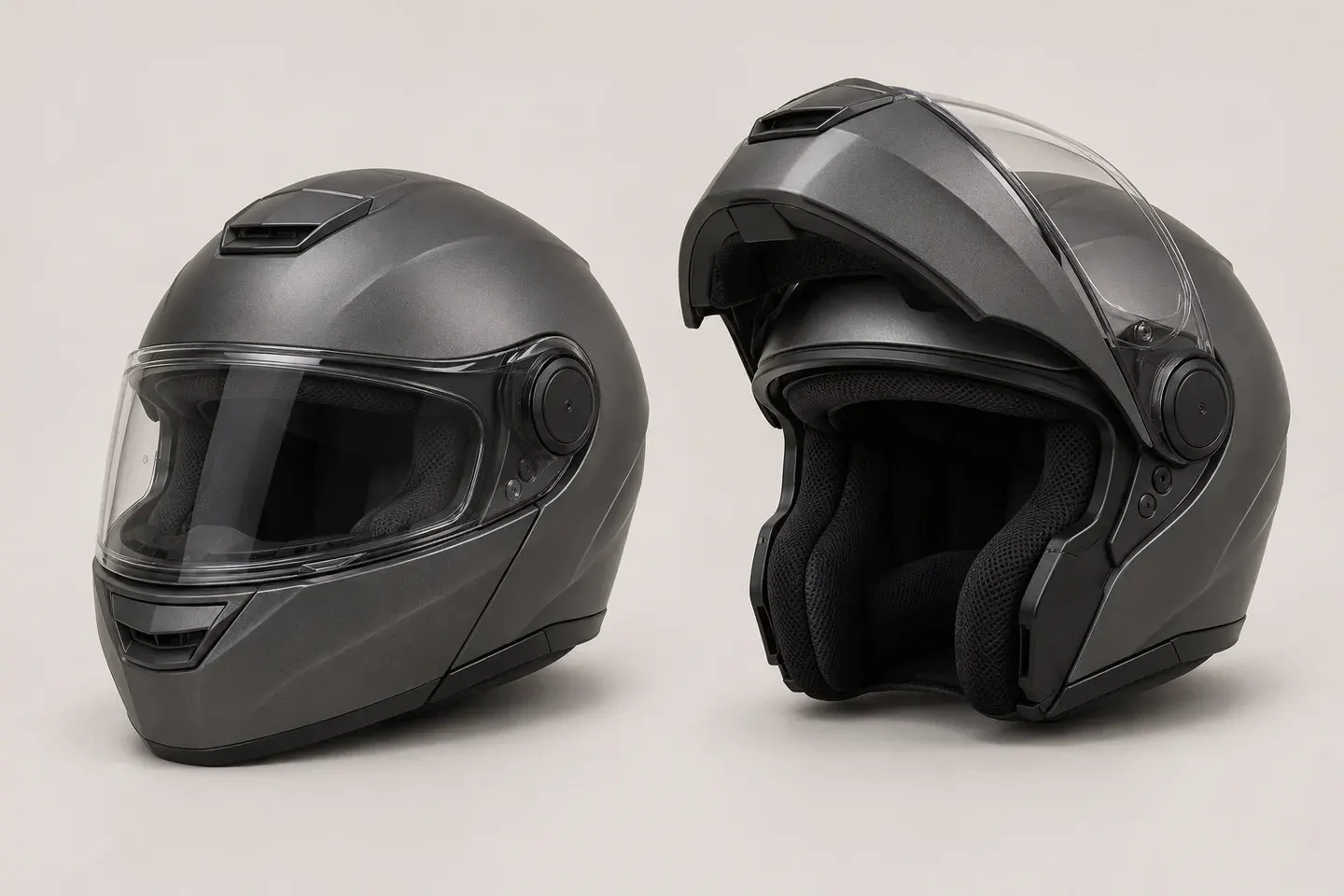
A modular helmet can make glasses easier to insert during a fitting because you can raise the chin bar while stationary. Try it secured in its normal riding configuration before deciding. Closing the bar can change how you reach the frames and whether there is clearance around them. Check the model’s instructions and approved chin-bar positions separately from eyewear comfort.
A fixed full-face helmet can work well if your frames seat easily and clear the shield. Try both types with the same glasses. Eyewear comfort is one part of the choice, alongside fit and the coverage you want. Bring any sunglasses you also use, since their arms and lenses may sit differently.
When to try a different combination
Change the combination if the helmet pushes the frames out of position, creates pressure that builds during a fitting, or prevents a shield from closing. A fitter can help compare a different helmet shape or manufacturer-approved pads. Ask an optician about frames that work with your prescription and helmet. Leave the shell and impact liner intact. Ordinary prescription glasses should not be assumed to satisfy a separate riding eye-protection requirement.