If you’re deciding between a secondhand premium helmet and a new helmet you can afford, start with the new one. A good fitting and a known history are more useful than a premium badge on a helmet whose past you can’t verify. The UK’s SHARP helmet safety program recommends buying new, even when someone you know offers you their old helmet.
The hard part of buying used is telling what you can check from what you can’t. A photo can show a worn strap. It can’t tell you whether the impact liner was compressed in a crash. Use the checks below to reject questionable listings and compare the alternatives.
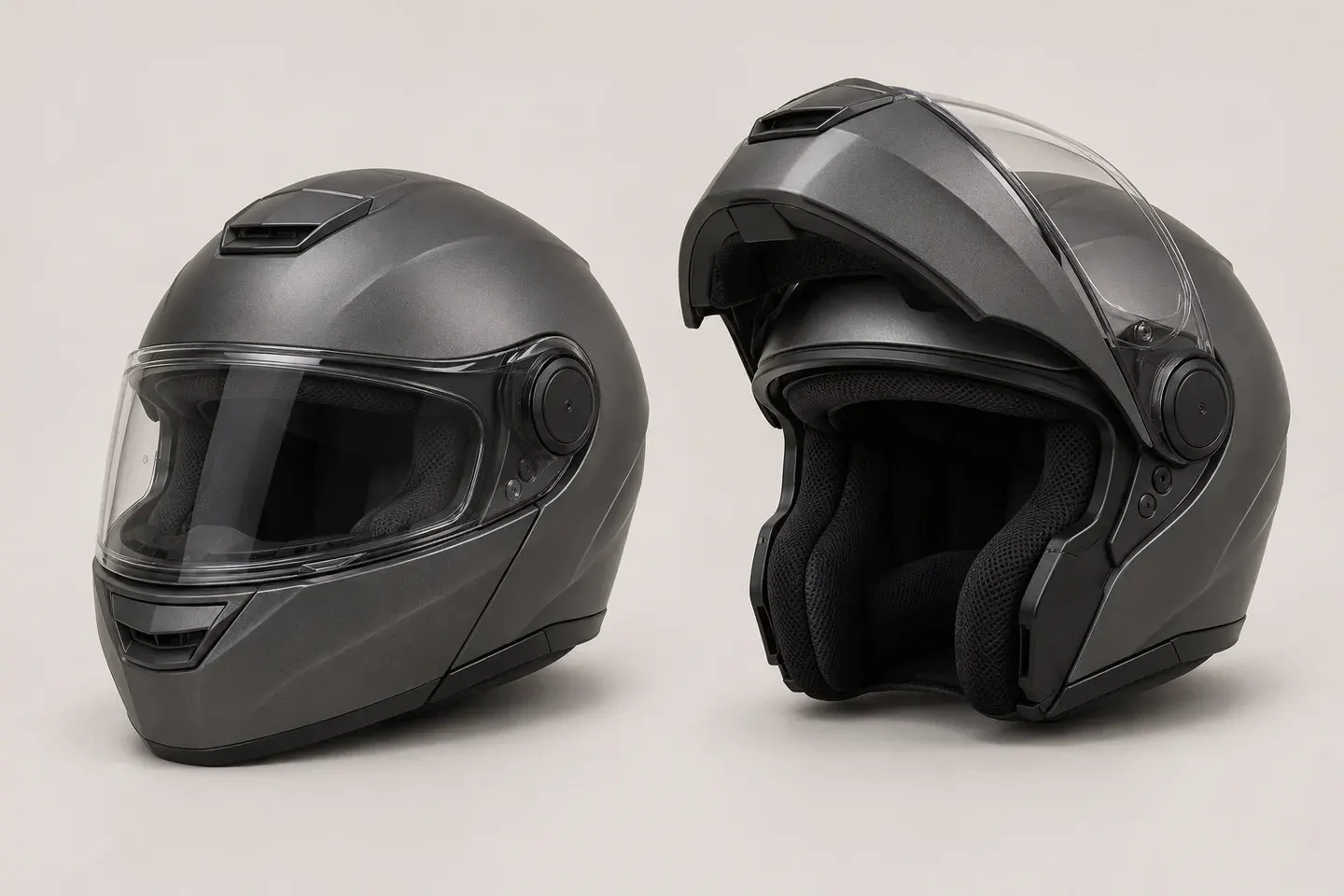
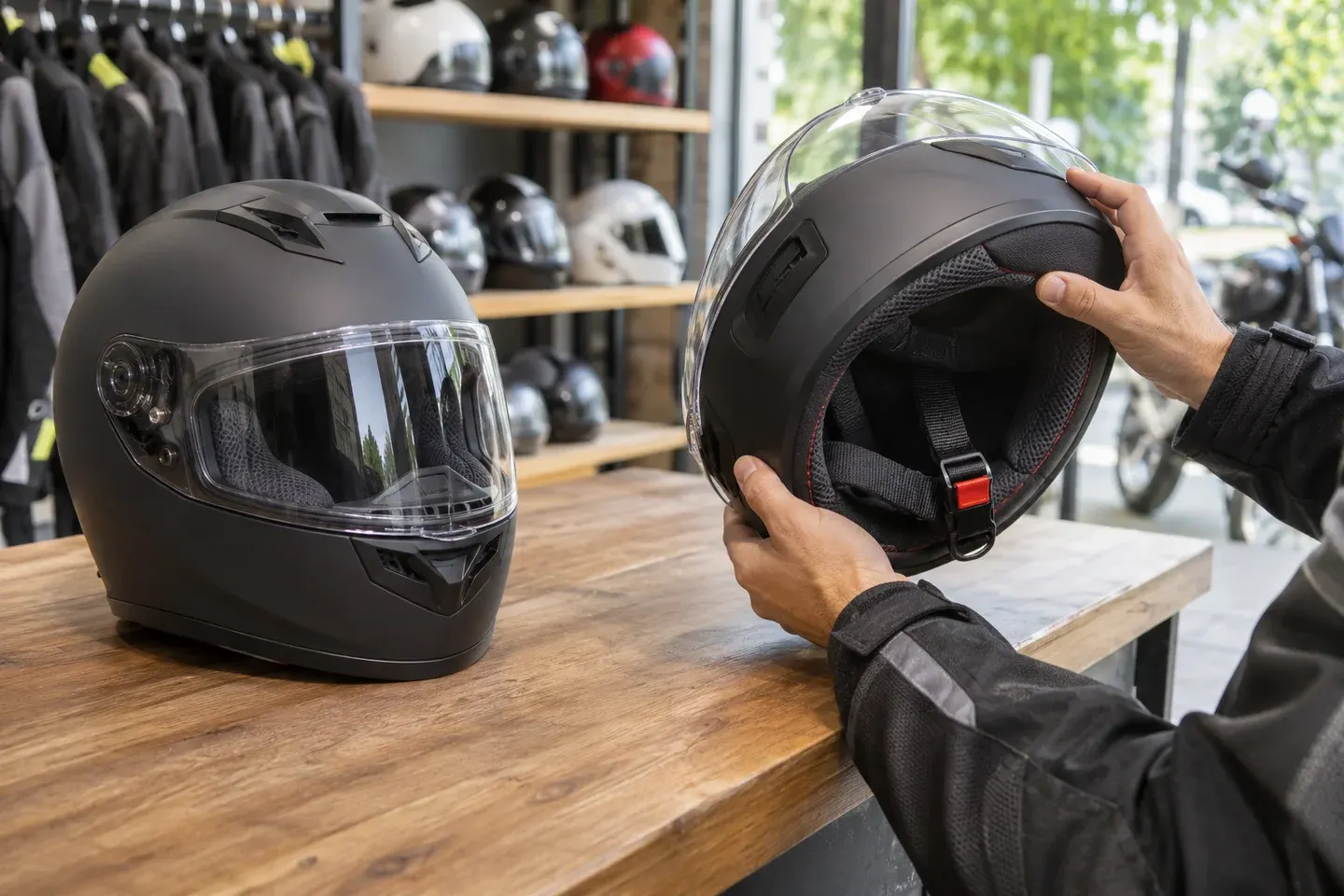
Hero image: AI-generated illustration of a helmet being examined. It does not depict an inspection service.
Why a clean shell isn’t enough
The impact liner and the soft comfort padding do different jobs. The soft padding is what you feel against your head; the liner beneath it helps manage impact energy. Shoei’s US guidance warns that a significant impact while the helmet is worn can damage the foam without obvious external signs. New cheek pads, a polished shell, or a fresh visor don’t address that uncertainty.
There’s a difference between evaluating your own helmet after an incident you witnessed and guessing what happened to a helmet you found online. If your helmet has taken a significant impact while you were wearing it, follow its manufacturer’s replacement guidance. For an uncertain incident with your own helmet, ask the manufacturer what it recommends. Our crash replacement guide covers that decision in more detail.
What a listing can actually tell you
- Identity: Ask for the manufacturer, exact model, size, and clear photos of the original labels. Compare those with the manufacturer’s documentation for the market where you ride. An approval label describes compliance, not the present condition of that individual helmet.
- Age: Ask for the manufacture date and proof of purchase if available. Check the maker’s guidance for that model and market. A purchase date does not tell you how long the helmet sat in stock or how it was stored.
- History: Ask whether it has been worn in a crash, dropped, modified, or exposed to unsuitable storage or cleaning products. Treat missing or inconsistent answers as a reason to pass. A seller’s answer is not a condition test.
- Obvious defects: A frayed strap, damaged fastener, cracked shell, loose hardware, or altered liner is reason enough to reject the helmet. The absence of those signs does not clear it for use. Don’t remove bonded material to inspect it.
For US shopping, NHTSA explains that the DOT label reflects manufacturer self-certification and warns about fake labels on novelty helmets. If the retailer, model details, or markings don’t add up, leave the listing. For other markets, check the relevant requirements before buying; the helmet laws guide is a starting point.
Why the same size on the label can fit differently
Even an identical model and size can feel different once the comfort pads have conformed to someone else’s head. Wear the helmet long enough to notice concentrated pressure and follow the maker’s retention checks. A helmet that moves when secured is a fit problem; tightening the strap further or improvising with padding isn’t a substitute for finding the right size and shape.
If you shop online, confirm whether you can try the helmet indoors and return it. Check fit before ordering a tinted visor or installing an intercom. Our fit and sizing guide shows how to start with head measurement and check the actual fit.
How to stretch the budget without buying an unknown history
- Try a simpler new helmet. Compare models that fit and meet the applicable standard before paying for graphics, a particular shell material, or accessories. See the budget helmet buying guide for a starting shortlist.
- Ask about new closeout stock. A discontinued color can be worth checking if the seller is reputable, the item is new, and it fits. Check the manufacture date, return terms, and whether replacement shields and pads are still available.
- Clarify what “open box” means. A box opened in a shop and an item returned after unknown use are different situations. Ask whether it was worn outside and how the seller verifies its condition. If the answers aren’t clear, choose a new example with a straightforward return policy.
Compare the total you’ll actually pay, including any shield or pads you need, and the cost of returning a poor fit. If a used listing is attractive only because it puts a premium model within reach, compare it with a new model that fits and has the features you use on a normal ride.
Sources
- SHARP buying FAQs: secondhand helmets, fit, and counterfeit warning signs.
- Shoei USA impact inspection guidance: hidden liner damage and replacement advice after a significant impact.
- NHTSA helmet buying guidance: fit, US labeling, and novelty helmets.