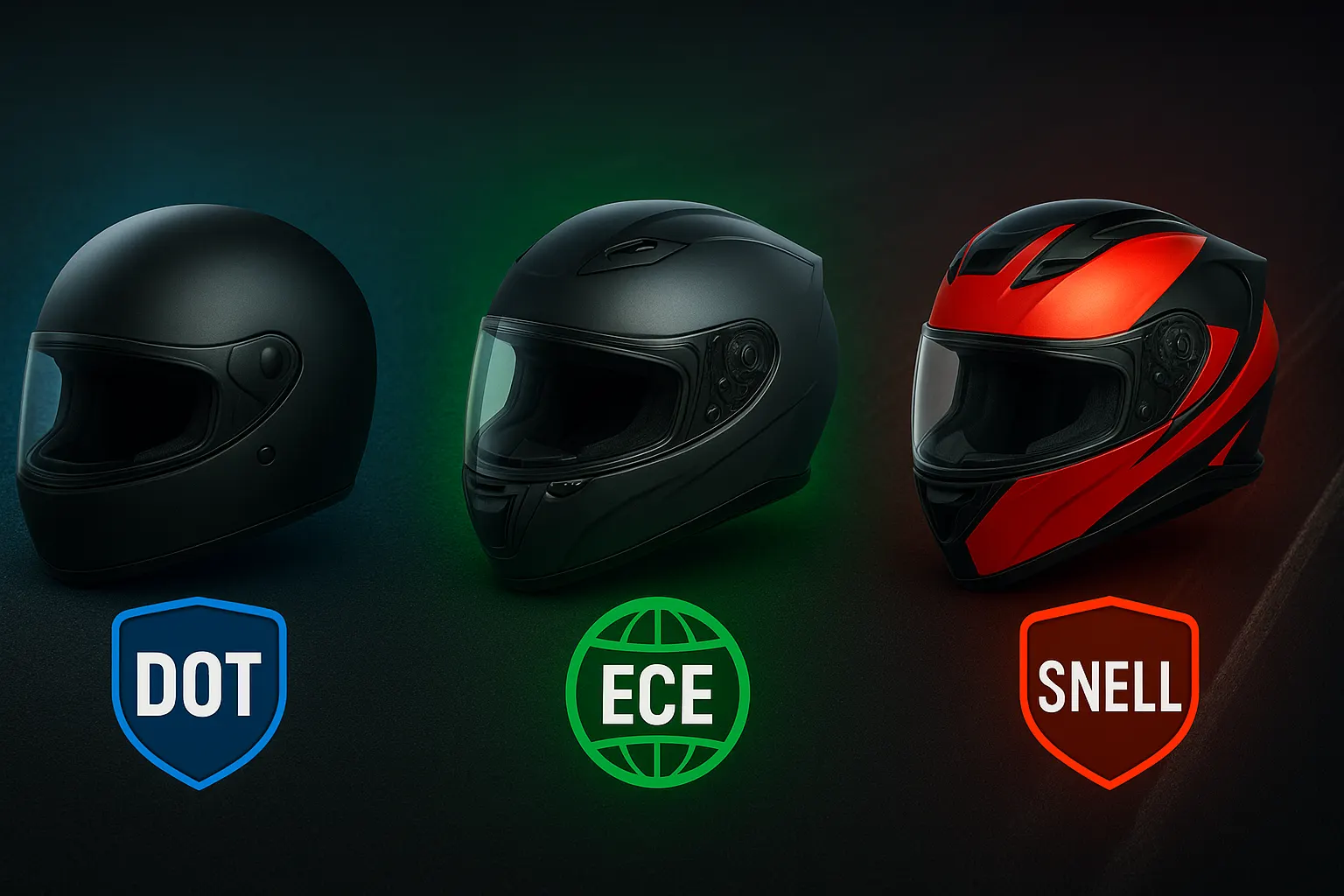
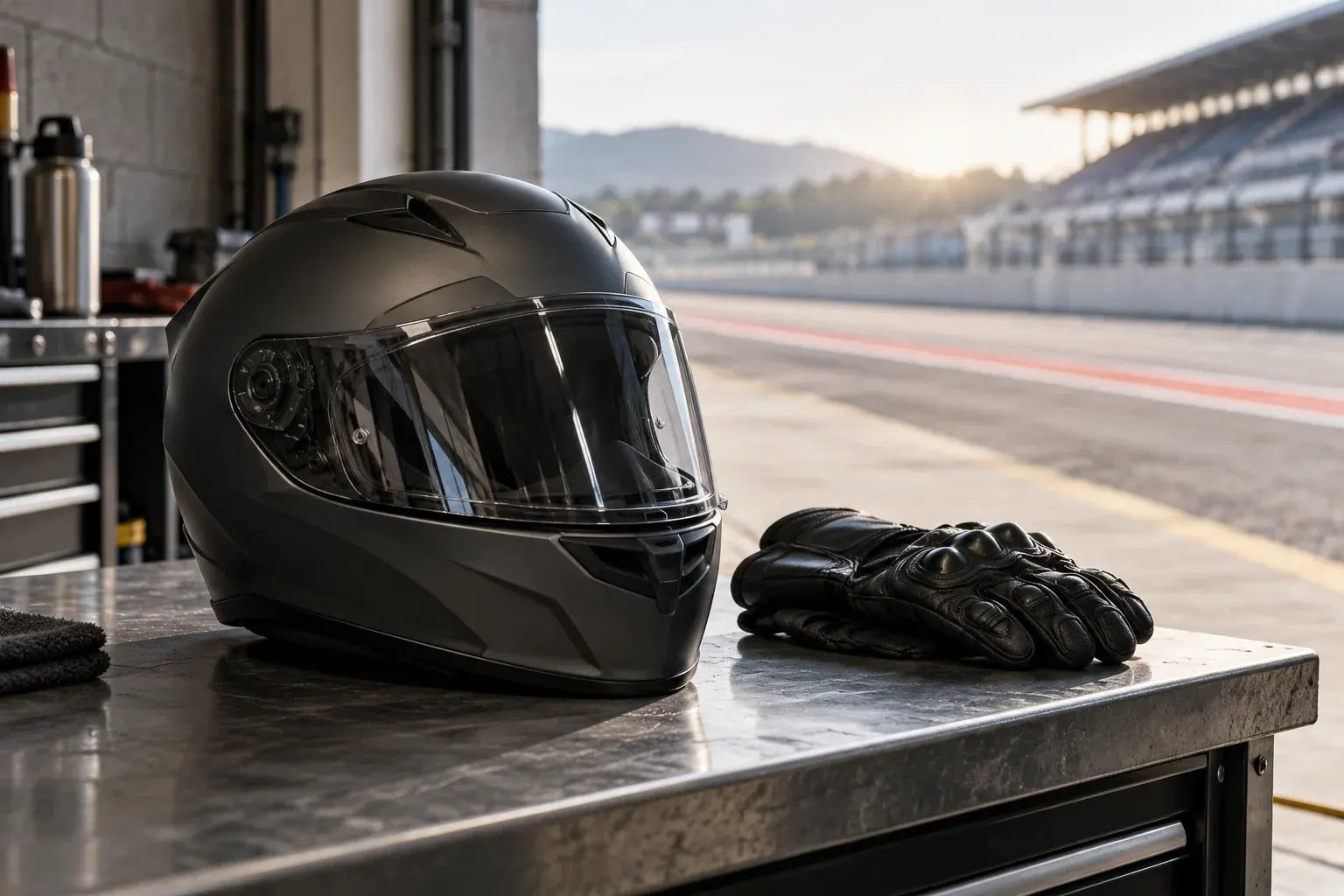
A helmet can carry a road approval and still be the wrong purchase for a race meeting. The important development for 2026 is FIM FRHPhe-02: a racing homologation that now appears in the equipment requirements of major FIM competitions. Before replacing a helmet, establish which rulebook actually governs your riding.
Why this matters in 2026
The FIM's 2026 MotoGP, Moto2 and Moto3 regulations require a valid FRHPhe-02 label. FIM has also announced newly homologated models and additional approved sizes. That makes the exact version and size more useful information than a retailer's broad description of a helmet as “race ready”.
FRHPhe-02 adds a racing evaluation to an existing recognized approval. FIM describes additional impact assessments, rotational-response requirements and a cheek-pad removal test. It is not another name for ECE 22.06, and an ECE marking alone does not establish FIM homologation.
Start with the event, not the shopping basket
| Where you ride | What to establish before buying |
|---|---|
| FIM competition | The current regulations for your discipline and class, including the required homologation and exact eligible helmet. |
| National or club racing | The organizing federation's rulebook and any event-specific equipment notice. |
| Ordinary track day | The organizer's accepted standards, condition requirements and inspection procedure. |
| Public roads | The road-use requirements where you will ride, checked separately from racing eligibility. |
A headline about MotoGP does not establish the rules at your local circuit. Send the organizer the model name, approval information and intended event before committing to a purchase. Save the response with the booking details.
The model name is only the beginning
Use the official FIM list for the relevant discipline, then match the full model designation and your size. A familiar retail name, similar shell shape or race-replica paint scheme is not sufficient identification. A special racing version may sit alongside a road version with a nearly identical name.
FIM identifies a sewn-on chin-strap homologation label as the physical confirmation. When ordering, ask the seller to confirm the actual stock item and label rather than relying only on a generic product image. On delivery, compare the helmet, packaging and paperwork before removing labels or riding in it.
A five-minute pre-purchase checklist
- Write down the event, class and applicable rulebook edition.
- Find the helmet in the official homologation list; check the size, not just the brand.
- Confirm the seller's exact version and regional road approval if you also intend to use it on the road.
- Try the correct size with your normal glasses and riding posture. Our helmet fitting checklist helps structure the appointment.
- Confirm the approved visor, accessories and configuration with the manufacturer and organizer.
Keep fit and eligibility as separate checks: a helmet that passes one can still fail the other. Buying an eligible model in the wrong size is not a useful compromise.
Should a road rider upgrade just for FIM approval?
Make the decision around your actual use. If a future event requires FRHPhe-02, that becomes a concrete purchasing constraint. If it does not, compare fit, the appropriate road approval, serviceable parts and everyday equipment rather than treating a racing label as a universal buying instruction.
For road-focused alternatives, the AGV K7 overview examines a full-face touring option. Our helmet catalog separates documented regional specifications. Neither catalog membership nor this article establishes race eligibility for a particular helmet.
Sources and further checks
- FIM: additional FRHPhe-02 homologations and label identification
- FIM 2026 Grand Prix regulations, April update: rider equipment requirements
- FIM circuit-racing homologation list
Check the latest event regulations when booking; this guide explains the verification process rather than certifying an individual helmet for an event.