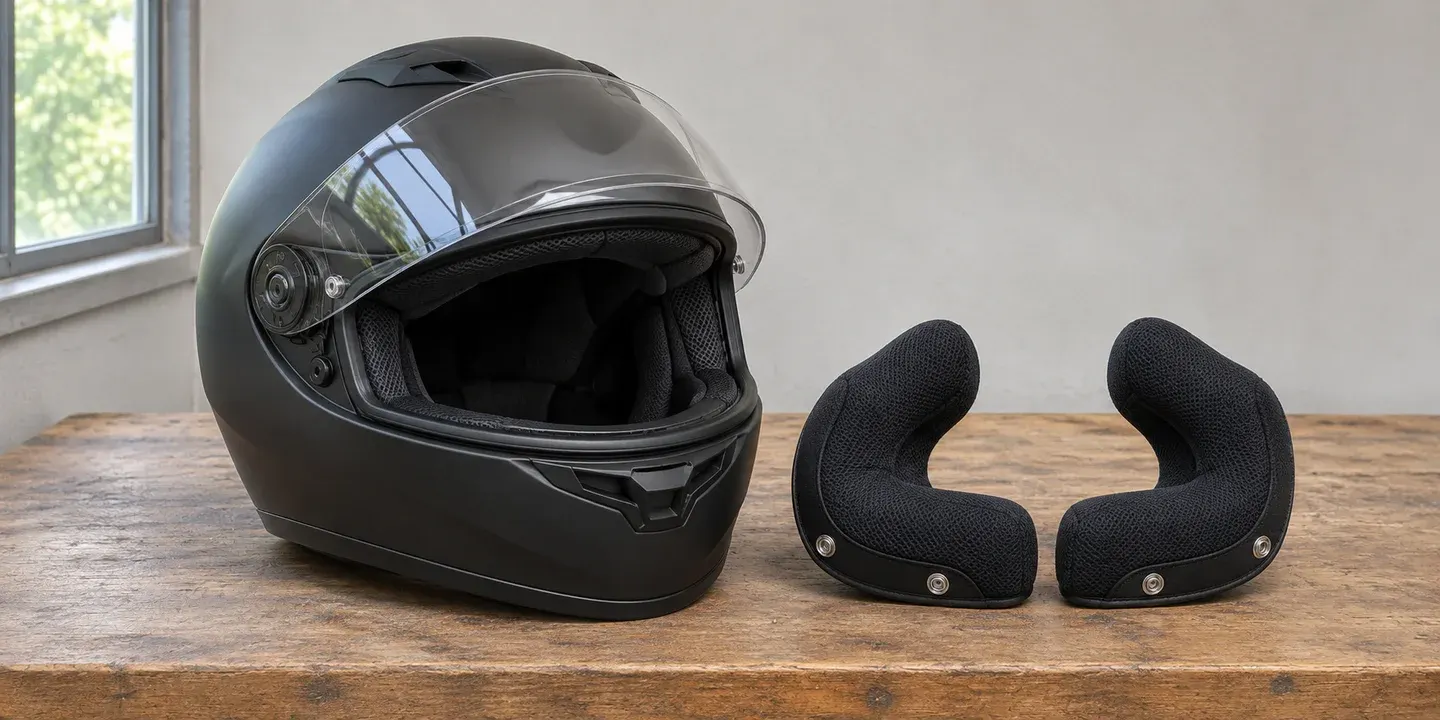
Try a different cheek pad thickness only after the helmet fits securely around the top and sides of your head. Cheek pads can ease pressure at the jaw or restore contact with the cheeks. If the helmet also slides around at the crown, start by comparing sizes and head shapes with a fitter.
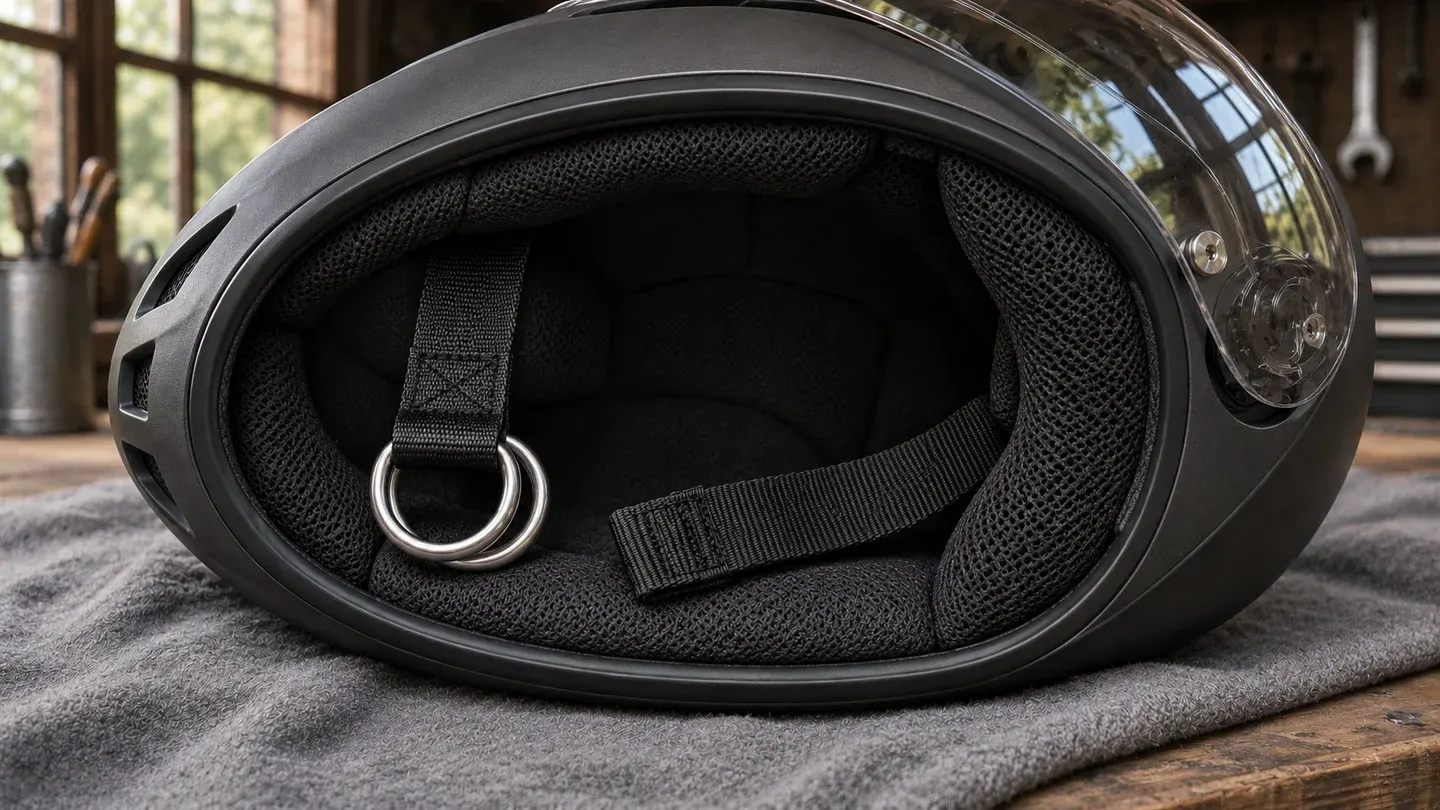
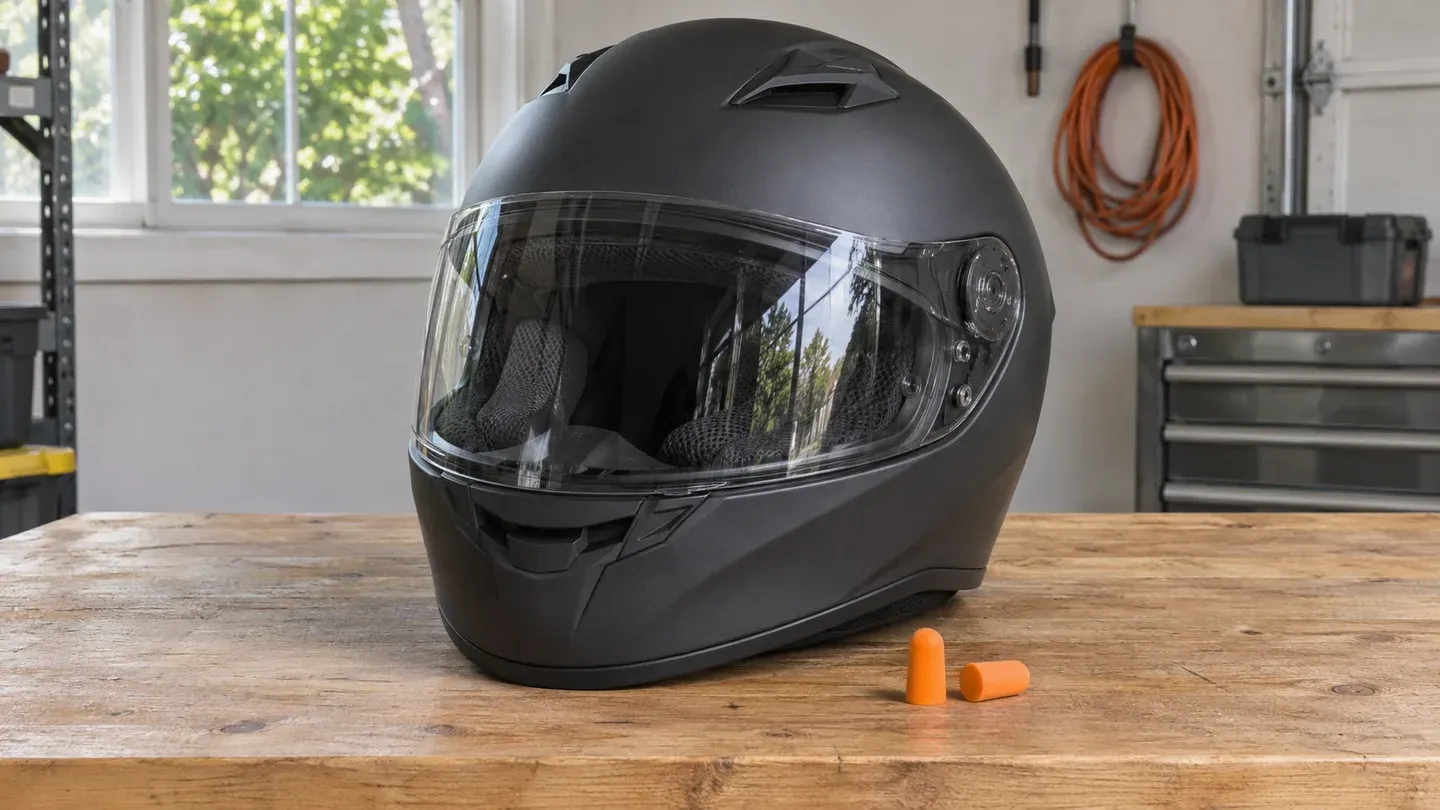
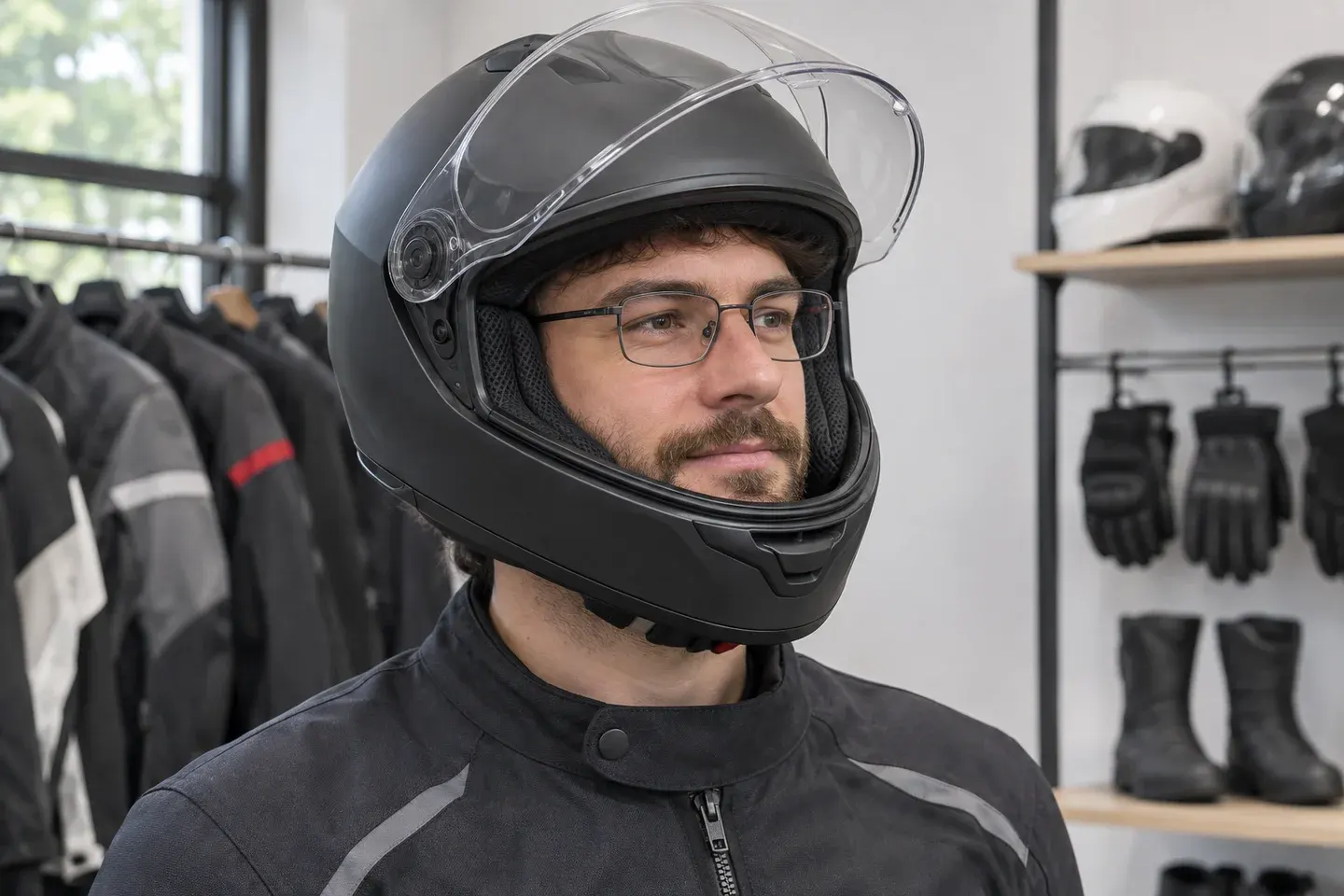
Hero image: AI-generated illustration of a full-face helmet and removable comfort cheek pads.
Find where the fit goes wrong
- Pressure across both cheeks: Firm contact is expected. If it becomes painful or interferes with speaking comfortably, ask a fitter to try a thinner approved pair while checking that the helmet still stays in place.
- Pressure at the forehead, temples or crown: Try a different size or interior shape first. A different cheek pad mainly changes the fit lower down. Some models have approved center-pad options or a manufacturer fitting service. If rounder helmets repeatedly press on your forehead, our Arai Signet-X fitting notes give an example of how to compare two interior shapes.
- Movement at the cheeks and crown: Recheck the fit of the helmet itself. Thicker cheek pads can give the jaw a snug feel while the upper helmet still moves. Use the manufacturer’s retention checks and our helmet fit checklist.
- One sore spot near your ear: Compare the fit with and without your usual glasses or intercom speakers. A frame arm or a speaker sitting too far forward can feel like a pad problem. See our fitting guide for glasses wearers for clearance checks.
Match the pads to the helmet you own
Write down the exact model, generation, market, helmet size and any part code or thickness printed on the current pads. Look up the manufacturer’s parts table and compare the stock configuration with the approved alternatives. Check the left and right pieces, how they attach, and whether your size needs a particular part. Bring the helmet and old pads to a dealer if the markings are unclear.
For one documented example, Shoei’s NXR2/RF-1400 manual instructs a rider with a size M helmet to choose the optional 31 pad for a looser cheek fit or 39 for a firmer fit. It gives separate rules for center pads, which vary by helmet size. Use the chart for your own helmet. A pad with the same number from a different model can have different attachments or geometry.
Adjust the comfort pads and repeat the fit checks
- Follow the manual’s installation sequence while parked. Use the designated tabs and fasteners. Keep the impact liner intact and confirm that all required parts are fully seated.
- Fasten the strap and repeat the manufacturer’s movement and retention checks. The helmet should stay in place and move with your skin rather than sliding independently. If you can pull it out of position, stop and have the fit reassessed.
- Wear the complete setup indoors long enough to notice concentrated pressure. Check your glasses, earplugs and speakers, if used. On a modular helmet, check fit with the chin bar closed and latched.
- Keep a note of the final pad codes and helmet size. That gives you a useful reference when ordering the same parts later.
Use only compatible parts and fitting methods approved by the manufacturer. Shoei’s Personal Fitting System, for example, calls for a trained fitter to adjust the center pad on a compatible helmet. If an approved pad change leaves the crown loose or the helmet painful, try a different helmet shape.
Replacing worn pads versus changing the fit
If the helmet still fits securely around the crown and the cheek pads have worn down, ask about replacing them with the original specification first. Check the helmet’s overall condition and follow the manufacturer’s replacement guidance if you find damage or know it was involved in an impact.
If the pads are simply dirty, check their care instructions before buying replacements. Once clean, let them dry as the manual directs and reinstall every required piece. Our helmet cleaning guide covers care for different parts of the helmet.