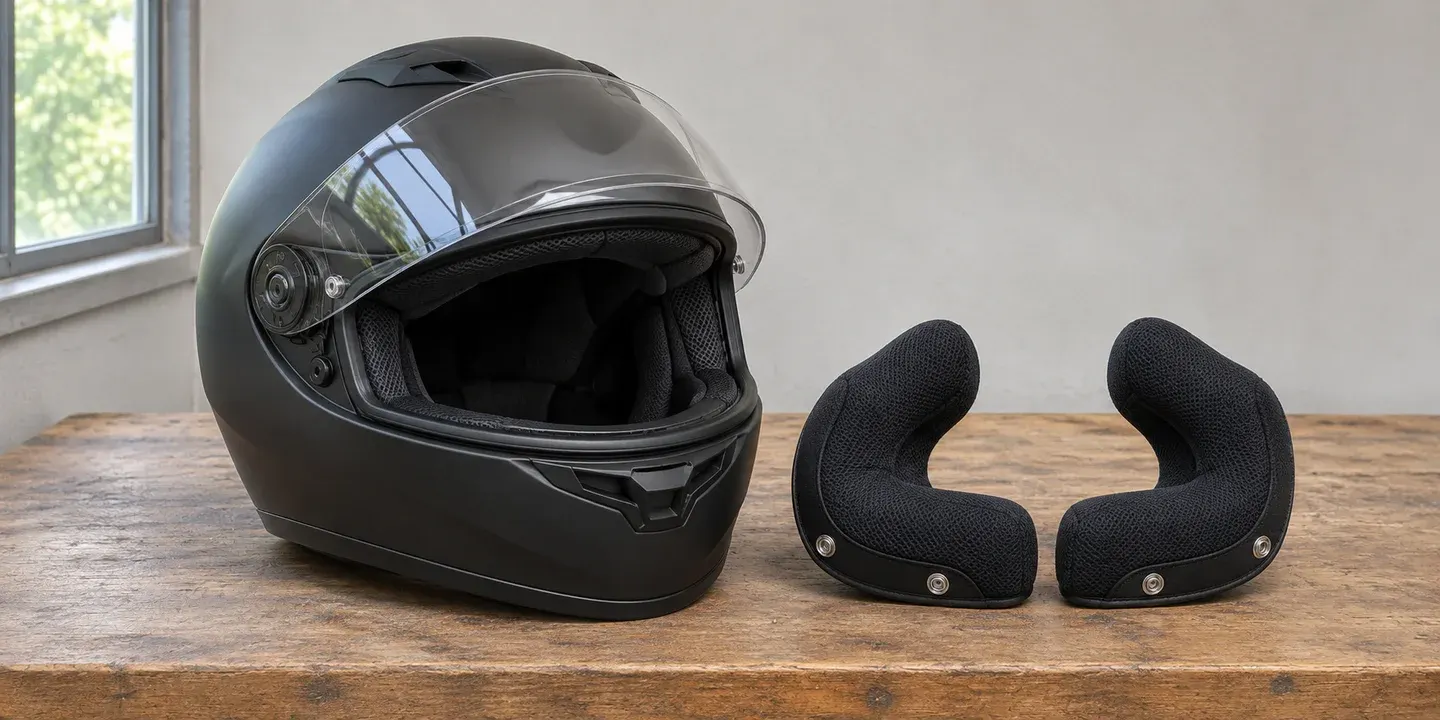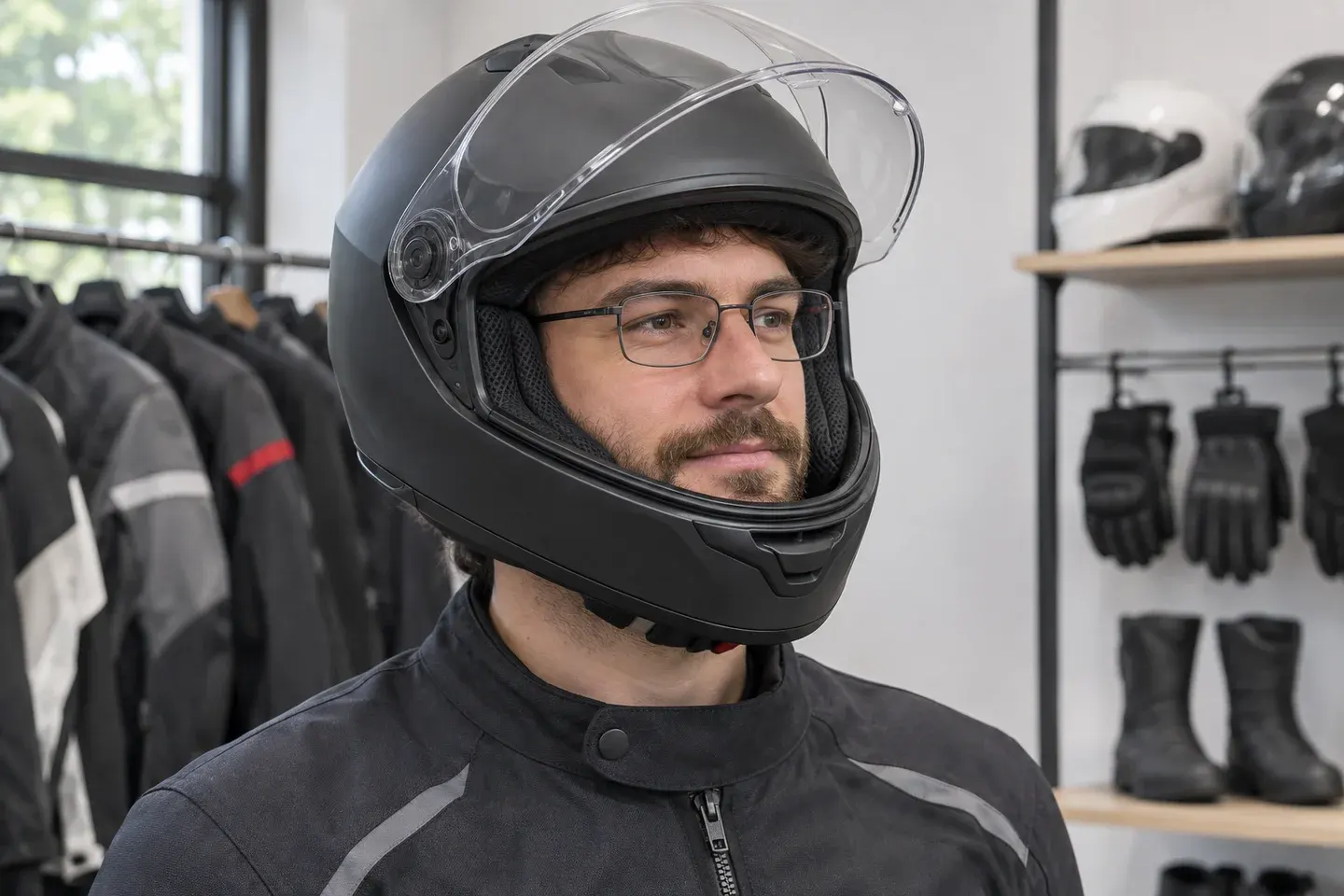
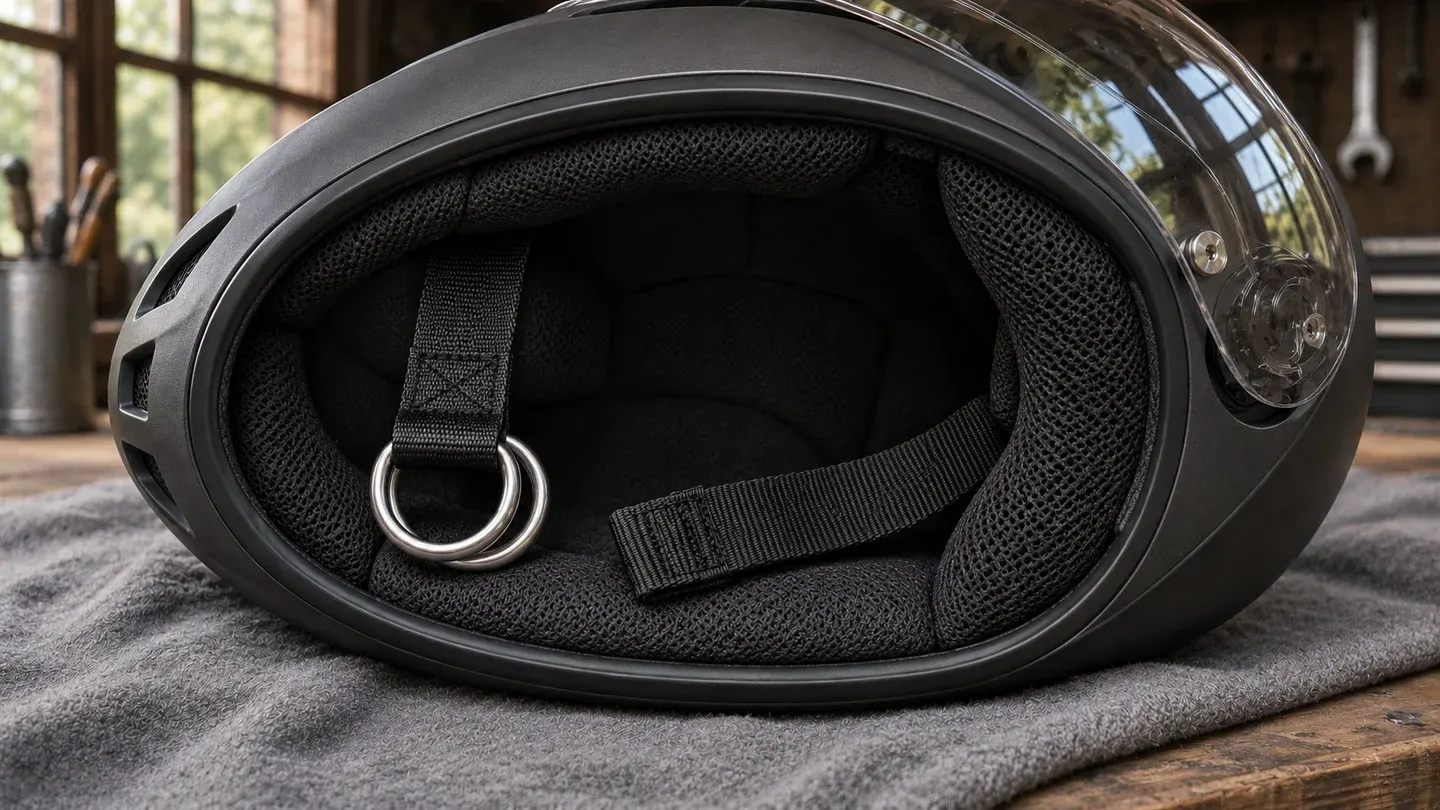
A motorcycle helmet chin strap should sit snugly below your jaw and keep the helmet from rolling forward off your head. A double D-ring fastener uses a strap threaded through two metal rings. A micro-ratchet uses a toothed tongue that locks into a buckle. Try whichever comes on your helmet with your own gloves, then check the strap tension and helmet fit before riding.
AI-generated illustration of an unfastened double D-ring chin strap.
How to fasten a double D-ring strap
Check the diagram in your helmet’s manual first. For the double D-ring system shown in Shoei’s safety manual, the two rings do the holding and the snap on the loose end keeps the tail tidy.
For a road helmet with this closure, see the fitting checks in our AGV K1 S review.
- Put the helmet on and pass the loose end through both rings.
- Fold it back over the outside ring and feed it back between the rings, through the inside ring only.
- Pull the strap snug against the underside of your jaw. Use the snap or end hook, if fitted, to secure the leftover tail after the rings are already holding the strap.
Before riding, tug gently on the secured strap to check that the webbing stays in place. If the tail is snapped down but the webbing slides freely through the rings, start again and compare the routing with the manufacturer’s diagram.
How to adjust a micro-ratchet buckle
With a micro-ratchet, the toothed tongue gives you several positions to tighten the strap each time you put the helmet on. The strap length sets the starting point. Use the manufacturer’s instructions to adjust that length if the tongue clicks into place while the strap still hangs loose, or if you have to force it to latch.
While parked, insert the tongue as directed and check that it locks, then tug lightly to confirm it stays engaged. Stow any loose webbing in the designated keeper. Try the release with your gloves so you know where to find it when you take off the helmet. Shoei Europe uses a stainless-steel micro-ratchet on the European Neotec 3. For details, see our Shoei Neotec 3 review and the manufacturer’s fastening and adjustment videos.
Check that the helmet stays in place
- Seat the helmet level on your head. Fasten the strap so it is snug and you can still open and close your mouth comfortably. Follow the fit instructions for your own helmet.
- Gently turn and tilt the helmet. On a full-face helmet, your cheeks should move with it and the pads should stay in contact. If the shell slides around your crown, reassess its size and shape using our helmet fit and sizing checklist.
- With the strap secured and your head tilted forward, have a fitter or helper try to roll the helmet forward by carefully pushing up at the rear base, as shown in the UK SHARP fitting guide. If it starts to come off, recheck the fastening and fit before riding.
Repeat the check with your usual jacket and neckwear. Make sure the collar leaves room to operate the fastener. If you wear a modular helmet, also verify that its chin bar has latched in the position you intend to ride with, following the model’s instructions.
What to check when shopping or inspecting a strap
Compare how easily you can fasten each system and confirm it is locked while wearing your usual gloves. SHARP treats the buckle choice as personal preference and does not independently rank chin straps. Use the helmet standards guide to identify the separate approval markings on the exact helmet you are considering.
Inspect both sides of the strap, its stitching and the buckle or rings. Stop using the helmet if the webbing is cut or frayed, stitching is coming loose, or the buckle fails to hold. Ask the manufacturer or its dealer what service is available for that model before using it again. If you are assessing an older helmet, use our used helmet inspection guide to check the rest of its condition and history.